

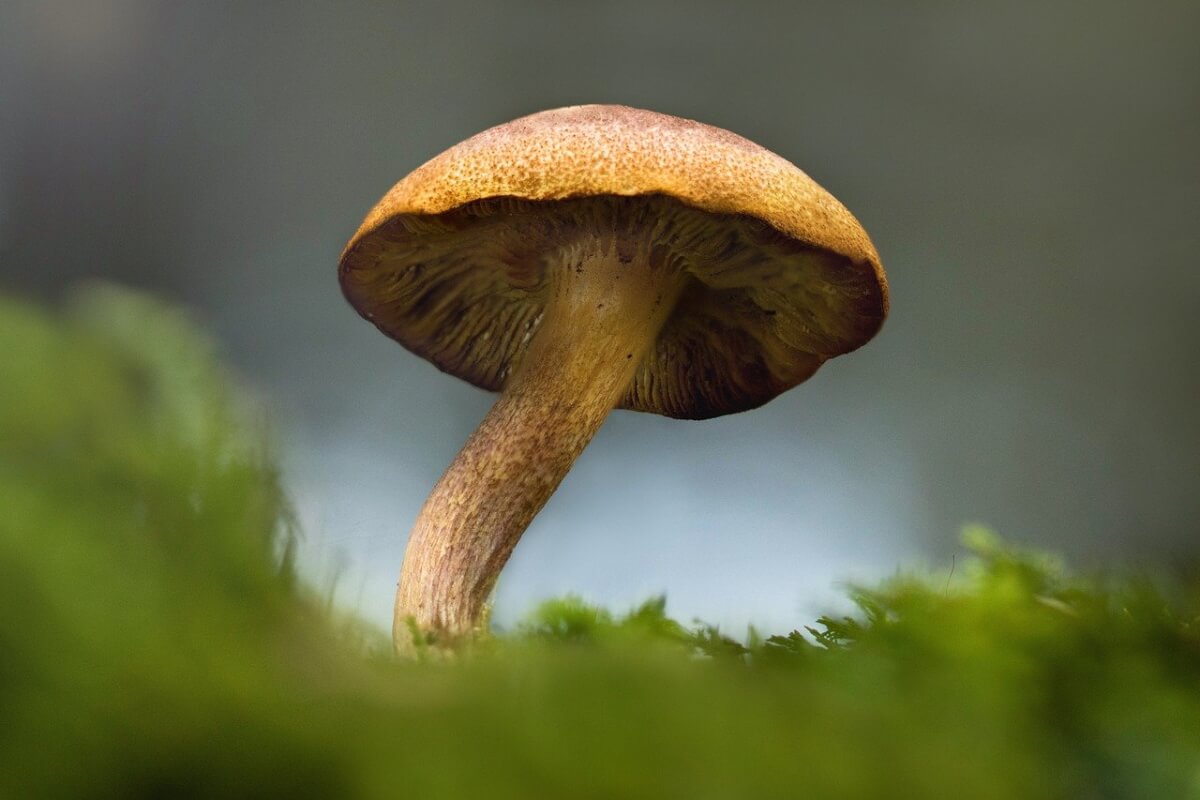
Medicinal mushrooms have been utilized for centuries in alternative medical cultures and more recent research has substantiated their clinical benefits for horses and other species. There are many different types of medicinal mushrooms and each has their unique benefits, while retaining a generic benefit across the board for enhancing the immune response. Mushrooms were one of the first whole-food herbal substances that I investigated years ago in clinical practice in the horse and they are still one of my favorites for a variety of reasons.
Around the year of 2006, I began my exploration of alternative medicine and herbs. This was instigated by own health crisis at the time and a need to explore options. Medicinal mushrooms were the first herbal substances that I utilized and explored in myself and my equine patients. At the time, I was contending with a high caseload of colitis cases in the horse, with many requiring hospitalization in our facility. As par for the course with colitis cases, the horses had diarrhea, dehydration, a reduced appetite and varying degrees of septicemia or bacterial infection.
I was currently taking medicinal mushrooms myself, using a blend that is very similar to the one that we still offer and utilize. Given the benefits that I had come to understand in viewing research on these incredible substances, I opted to use them in my equine patients in the hospital. I believed that I had nothing to lose and these whole foods had much to offer.
What was amazing was that first, they were readily accepted by the horses in their feed, as most mushrooms have a naturally sweet taste and odor. My patients consumed them readily and as the days past, not only had their appetite resumed, but their feces were no longer loose. What was once loose and watery with a foul smell, was now semi-formed with a reduced odor. The horses that were on the mushroom blend recovered more rapidly than I had experienced in the past with traditional therapies of antibiotics and intravenous fluids alone. In fact, within 72 hours, most of those horses on the mushrooms were off their IV fluids and transitioned to oral medications. The average patient was discharged about 3 days sooner than those not on the mushrooms.
What was happening in those horses on the mushroom blend?
Those were the days prior to my understanding of the digestive microbiome and the influence upon the horse and their health. Thus, I had not been performing fecal cultures, but looking back, the clinical response with the fecal transformation was enough to tell me that the digestive microbiome was shifting for the positive. What I didn’t understand at the time was how this positive shift impacted their health, their inflammatory status, and their immune response. Just shifting that microbiome in their gut was enough to shift the entire body for the positive.
After this experience, I began to investigate further and upon speaking with researchers, it became evident that through the use of medicinal mushrooms, we were altering the gut microbiome and influencing overall health. This is huge, and I mean huge, because in looking at recent research, it is plainly evident that almost every health ailment in the horse and in people, is likely linked back to in imbalance in the gut microbiome. Shift it to the positive and you change the entire dynamics of the situation. Something that my standard therapies of pharmaceutical medications was not able to achieve.
Given the overall response to medicinal mushrooms in the horse, I began to use them in almost every clinical situation that I encountered as a veterinarian and still do to this day. I used them in wound therapy to aid healing. I used them in various infectious situations from colitis to bronchitis and pneumonia, not to mention allergies and skin infections. I also used them very successfully in cases of Lyme disease and EPM, when traditional therapies had failed us or the horses had relapsed.
Again, the responses were very favorable in every situation. There seemed to be nothing that these medicinal mushrooms would not benefit.
Here is a run down of the clinical benefits, again with different species being stronger or more effective in certain categories:
- Immune stabilizing; either enhancing or decreasing the immune response
- Enhances the digestive microbiome, reducing growth of more harmful bacteria and encouraging the growth of beneficial bacteria
- Encourages proper blood circulation and fluid exchange, reducing edema and fluid retention while improving blood flow to the entire body
- Modifies the inflammatory response, reducing inflammation, pain and swellings
- Enhances neurological function and nerve repair
- Impacts cognitive function, improving mentality and mood, altering anxiety and depression
- Impacts organ function and health from kidney to the liver and other organs
- Assists with natural detoxification of the body
- Impacts metabolism and insulin function
- Improves overall energy, performance, cellular health and repair
Given this extensive list of clinical benefits, it is wonder why we do not use them more often. In fact, I do strongly encourage their clinical use in the horse, but for some reason many do to take advantage. There is not a situation that I do not recommend their usage on some level. No matter if we are contending with an infection, metabolic problems, joint disease, tendon issues, hoof ailments…the list goes on, medicinal mushrooms can have a huge impact.
How do these mushrooms exert their clinical benefits in the horse?
- Inherent vitamins, minerals, protein, carbohydrates and fats to nourish the body
- Polysaccharides (special sugar molecules) which exert many clinical benefits from the gut microbiome to immune function and inflammation
- Beta-Glucans (special polysaccharides)- same benefits as above
- Triterpenes- special chemical substances found to be stimulating to the immune response and being anti-viral in property, not to mention other clinical benefits
There are a couple of mushroom blends that we offer and use in the horse with tremendous benefit:
- Cur-OST EQ Immune Full Spectrum – this is a blend of some full spectrum mushrooms that include all components but mainly concentrates or focuses on the polysaccharides with a general level of >20% to impact the gut microbiome, inflammation, the immune response, and other factors of health. This is a blend of six medicinal mushrooms, including Cordyceps, Poria, Coriolus, Inonotus, Ganoderma, and Maitake. This blend promotes synergy between the different species and enhances the effects.
- SV EQ Mushroom Boost – this is a new blend and utilizes the same mushroom species as the other with the exception of Poria and in its place, we use Hericium erinaceus or Lion’s mane. This blend is unique because newer technology allows for us to extract and take advantage of the beta-glucans and triterpenes. These molecules are harder to extract and isolate in comparison to the traditional polysaccharide component. By including the beta glucans and triterpenes with the concentrated polysaccharides, we enhance the benefits to the horse on many levels. In my opinion, there is more of a drying effect and a slightly stronger bitter taste, which is beneficial to the metabolic equine patient.
From this veterinarian’s perspective, medicinal mushrooms should not be overlooked in the horse, no matter the situation. They can have a profound impact if used properly and at the correct dose, which can vary depending on the situation. I strongly encourage those horse owners with ongoing health issues to consider adding one of the above formulas to their regimen.
Author: Tom Schell, D.V.M, CVCH, CHN
Can these supplements be used with cur-ost total support?
Absolutely!
I have tried a mushroom supplement recommended by equine vet/ dentists. All 3 horses broke out in hives. This occurred at different times, because they were not all using the supplement at the same time. And it was two different batches(same brand, 1 year later, so a new batch). I would like a lot more research before I would ever try again.
Hello. Thank you for your comment and I can appreciate your point of view, however, I’ll give you some things to kick around. First, there is tons of research on various mushrooms species and their impact on health, one just needs to search for them, often by species name. A good place is pubmed.gov. Second, mushrooms are forms of fungi and yes, some animals and humans are hypersensitive to fungi in general or mold, and thus, there can be cross reactivity. However, when using a supplement with many species of mushrooms, and a horse reacts, it is hard to say if it is one type or many. It could just be one specific mushroom or that particular extract. In truth, I have yet to find a horse that reacts to mushrooms, but more so, when they do react, it is a sign of a gut microbiome imbalance, which is true for most allergies. Thus, if I have an allergic reaction, I know to readdress that gut health and focus in on it, often through other herbs and dietary changes. To see or experience and allergy and just point a finger at something as being ‘bad’ is incorrect. This is like gluten allergies or peanut allergies. Science is point out to us that it is the microbiome that is imbalanced, creating the perceived allergy. Fix the microbiome and health can be restored on many levels. Thanks.
I’m currently using a mushroom powder for only two days so not sure if they’ll help my horse. I’ll have to report back. Always healthy 18 y.o. he has recently had some type of sinus irritation. Swelling and discharge from one nostril. No fever, eating normally, all bowel/urine normal – there are only the two symptoms…the reason it occurred to use the mushroom powder is that I’ve been giving it to my 12 year old almost albino Pit Bull. She has numerous aging ailments but what I wasn’t intending to treat were mole like sores that she’s always had. One so sensitive it would bleed at the slightest touch. After one week one of the two sores is healed completely, the other looks almost completely healed…! Like I said, I wasn’t giving mushroom to treat those, but more so lumps and bumps she gets after eating – like a histamine response/hive- like. Those have ceased as well! So thanks for your article. Very encouraging information!
My Friesian horse is 8 years old. He is in training in dressage. Works 3 to 4 days a week. His energy level is low, besides that he is a very good boy and is in good health. My question is would a mushroom blend help bring up his energy?
Hi. The mushroom blend would be a good place to start, but the ultimate question is what is depleting your horse of the energy? Diet? Lifestyle? Gut health?
Tom Schell, D.V.M.