

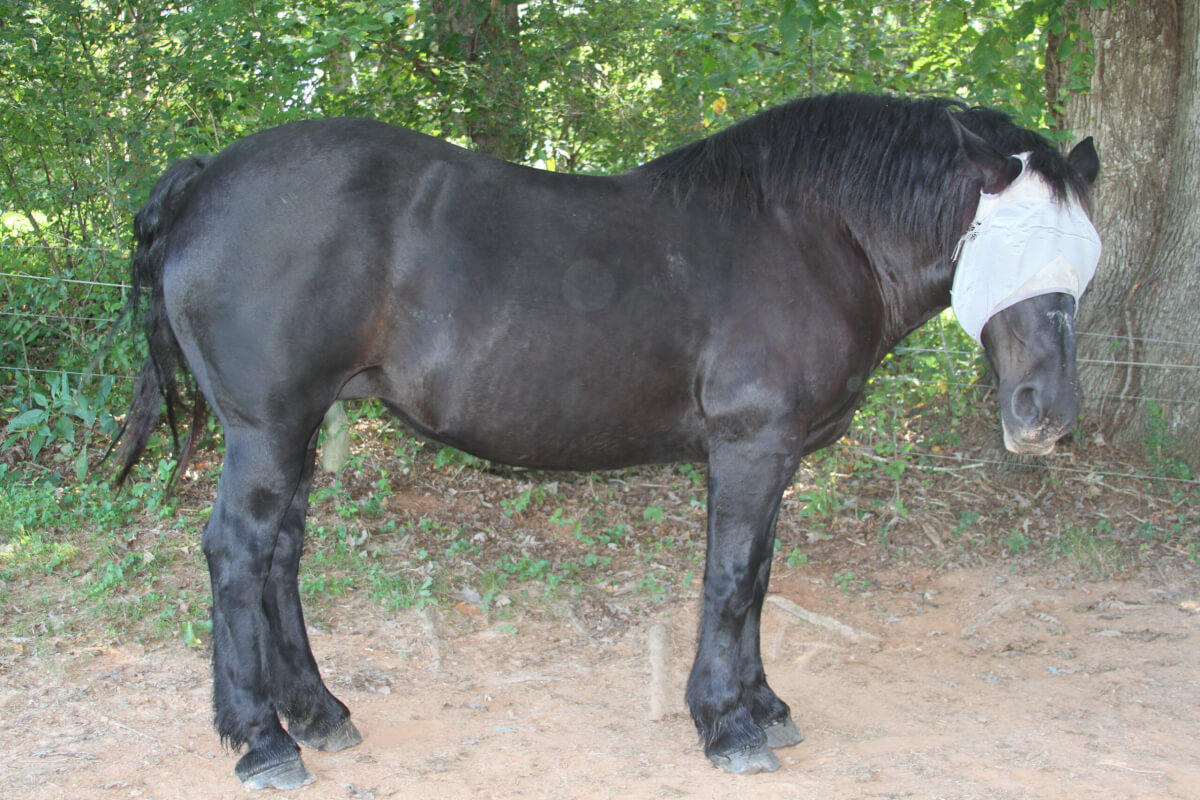
The metabolic horse or better known today with the acronym, EMS, implying equine metabolic syndrome. The condition or syndrome, as it truly is, has become a catch phrase of sorts in the equine community and with veterinarians alike, being diagnosed in almost every horse with four legs. EMS has become an epidemic and many horse owners are grasping for solutions or a means of better management. The truth is that the condition is very easily managed when looked at from a different perspective. The difficulty lies in the thousands of perceived solutions that are out there from a certain feed to a medication. There is much confusion and with that, there is frustration and a low level of expectation when it comes to results or expectations. This shouldn’t be the case. Let’s take a look at EMS and outline your true options.
I’ve written many articles here on this website as well as on my consultation website, www.secondvet.com, regarding equine metabolic syndrome and outlining the physiology and management options. Despite writing and often repeating the same material, the overall concept is still cloudy for many, which is fine and understood. Sometimes there is too much information, which creates this confusion, so let’s see if we can make the information more concise for purposes of true guidance.
The first thing to get across is that this is a syndrome, hence the term equine metabolic syndrome. It is not a disease, but more so just an accumulation of risk factors which then predispose the horse to other health and lameness ailments. This is true for metabolic syndrome in humans as well. The truth is that the condition is completely developed or acquired due to lifestyle and food choices, in both humans and horses. Thus, if it is created out of choices, then by reversing or altering those choices, it is very possible to reverse the condition and create that ‘cure’ that most horse owners are seeking. The problem comes in reversing or changing those choices. This is difficult for most horse owners and for people with metabolic syndrome themselves. We do not like change and sometimes we perceive that change as almost impossible. Thus, instead of truly dedicating ourselves to making those changes, we only change a few things and the end result is not that great. Sometimes there is some improvement, which is good for the horse, but true health is not really restored. Instead of making those changes, many just choose to seek out a medication to solve the issues, which rarely pays off and more so drains the horse owner financially. This desire for medications has become rampant on the human side with the GLP-1 agonist medications, which by the way are finding their way to the equine market in an off-label fashion. The medications may provide some clinical benefit, but health is not restored and most patients and horses are left contending with the issues for the long-term, which just grow worse.
Equine Metabolic Syndrome; The True Cause
EMS is rampant in the horse industry. In fact, I’d guess that 9 out of 10 horses are overweight, whether if they test ‘positive’ for insulin dysfunction or not is a different matter. We have shifted our acceptance of a grossly overweight horse over the years and now, an overweight horse is considered to be the new normal. Body condition is a huge factor and something I’ve discussed in another article. In years past, ideally, we’d like to see a horse where we had to put very slight pressure to their chest wall in order to feel the ribs. Now, that detection of ribs often requires more forceful pressure to get through the 1-2 inches or more of body fat on the chest wall of the horse. Not a good situation.
As mentioned prior, metabolic syndrome is a syndrome, not a disease in and of itself. The term ‘metabolic’ refers to the metabolism of the cells within the body and their ability to burn calories in order to generate cellular energy in the form of ATP. This energy is evident clinically but is also not so apparent on a cellular level, yet vital. Every cell in the body must generate cellular energy in order to do their job properly. Thus, when we have a disruption in metabolism, it implies that the cells are not generating energy properly, and therefore are not functioning properly. This would be like batteries in a flashlight. They may just be producing enough energy to get a low dim out of the light, but not enough to read a book by at night. Same with the cells. The horse may be able to meander through life, but likely, they do not have the clinical or cellular energy to do much more than that.
One of the most evident or tell-tale signs that there is a metabolic problem in a horse, or person for that matter, is an overweight body condition. Why is this so evident? Simply because of the metabolism factor noted above. If the cells are not working properly and burning calories to generate energy, one of the first signs will be a change in body condition with fat accumulation. So, if we look at at those 9 out of 10 horses that are overweight, they do indeed have a metabolic condition present. Now, whether if that has reached the state where their insulin is not working properly is another matter and debate. Some choose to wait until that problem is present, which is only a matter of time. Ideally, one would address the problem BEFORE the insulin levels start to rise. It is not that the clock cannot be changed back once this stage is reached, but that it is much easier to do so before the syndrome progresses or worsens. Insulin dysfunction, by the way, is a sequelae to EMS or an effect of the condition. It is not the true syndrome, but an effect of the syndrome. Just like cardiovascular disease is an effect of metabolic syndrome in humans.
The bottom line underlying cause or pathology behind metabolic syndrome in the horse is impaired cellular energy production, or impaired cellular metabolism. This is what is going on in your horse on a cellular level, like a car with a drained battery. Given this, restoring cellular function is the key to reversing or improving the metabolic condition in the horse. This is what you are targeting and as you do this successfully, other effects from bodyweight to insulin dysfunction will improve as well. It is like links in a chain. If you just target an effect, such as the horse’s overweight body condition or even impaired insulin function, then you are not addressing the root cause and your results will be highly variable.
Now, what is the cause behind the impaired cellular energy production?? Good question and there are many perceived causes or contributors, based on research. The number one cause is chronic inflammation and oxidative stress, but this is brought about by many factors from stress to diet, lifestyle, and digestive microbiome imbalances. So, there is never ONE thing to correct, but multiple.
Equine Metabolic Syndrome; The First Step is Movement
There are many articles on this website and www.secondvet.com, regarding EMS and treatment options. I think at times there is too much information and for that, I apologize for the confusion. The reality is that given our goal of restoring cellular function, there are many, many true options, hence the many choices you may see offered by us at Nouvelle Research and Secondvet. I do not mean to create confusion, but from my research perspective, there are so many options that truly work, and thus, we make them available. The more choices, unfortunately, create more confusion. Let’s take it step by step.
I mentioned earlier that metabolic syndrome is created out of lifestyle choices, so this is where we need to begin if we wish to rectify the situation. The lifestyle of your horse needs to change and it must change. The lifestyle of most horses is sedentary, often limited to a dry lot or even a stall with very little turnout. Some exercise their horse, but then they are put back into that dry lot or stall. A horse was meant to be on turnout for as much time as possible, ideally 24/7 in most cases. The restriction in their activity and access to what they were born to consume, meaning pasture, is greatly to blame for the creation of EMS. This is a major problem for the industry and I find at times that most owners either board their horses with little turnout or have very little property available for true turnout. A true issue that I do not know how to address. This isn’t a problem on the human side with a person with metabolic syndrome, at least when it comes to therapy. If they are told to get exercise and go for a long walk every day, there is no issue, other than making the choice to just do it. As the body of the horse becomes sedentary, not only are calories not being burned, but that sedentary behavior impacts them physiologically and damages the cells in the body, contributing to the development of metabolic problems. This is well known fact in the world of research. A body at motion will rarely develop metabolic ailments, not to mention other health problems, and the aging process is greatly reduced.
Step One: Get your horse moving! A life on a dry lot or in a stall is not a life and will just breed other health ailments, including metabolic syndrome, but not excluding others like ulcers, digestive ailments, and even behavioral vices. If your horse has been on a dry lot, then take the program slowly and get them out walking, truly walking, for 20-30 minutes per day. Hand grazing doesn’t count. You are looking for true movement and ideally at a steady clip to get the heart rate up and restart the metabolic process. If your horse’s feet are in bad shape and there is pain, then this needs to be dealt with accordingly, which we will discuss. Use boots if needed, but get them moving. Then, over time, start to increase that work to maybe a lunge line, again for 30-40 minutes, moving in both directions. Increase the exercise regimen as your horse allows, but keep in mind that many of them are simply lazy, due to their prior lifestyle and metabolic derangements. Don’t let them dictate to you what they will and will not do. It is a choice and as the owner, you have to make that choice for them.
Equine Metabolic Syndrome: The Second Step is Proper Diet
The average diet for the metabolic horse is improper from my perspective and not only creates the problem of metabolic challenges, but encourages the condition to progress, often at a rapid pace. The diet is rather simple, as most of my consulting cases would conclude. The more complex that you make it, the worse the condition becomes over time. Currently, most of these horses are on a dry lot, as mentioned prior, and are fed low quality forage, usually a fescue or Bermuda variety, often used to keep them munching on something or literally occupied during their boredom. Most owners are told to seek the forage with the lowest carbohydrates, for metabolic reasons, and as a result, the overall quality is very poor. Despite hay testing, the horses just fail to thrive and their condition progresses.
Additionally, most owners are giving their horses a vitamin-mineral supplement or ration balancer, which is nothing more than synthetic vitamins and minerals in their raw form along with synthetic or artificial flavoring to cover up their bitterness. Often, this flavoring and additive volume to these supplements is high, if you look at the dose that you are giving and work the math backwards. This is not nutrition and a vitamin supplement was never meant to act as the primary source of nutrition in any species, man or beast. Originally, a vitamin supplement was meant to supplement a high quality diet or act to replace a nutrient that was perceived as missing from the diet, but only temporarily until the diet could be rectified. So, in reality, most metabolic horse owners are giving poor quality nutrition, no pasture access, and then filling the voids with a synthetic based nutritional supplement.
Here is the thing. The diet chosen is not only the primary source of vital nutrition for your horse, from macronutrients to micronutrients, but the proper diet itself contains many phytochemicals, including antioxidants and natural anti-inflammatories, to help the body of the horse (or human) to defend itself, repair itself, and ward off health ailments. If you compare the nutritional breakdown of a higher quality forage like Orchard grass, Timothy, or ideally a legume like Alfalfa, with other grass forages, you will see the difference, not just in nutritional value but overall through the phytochemicals present, simply in how the horse responds. This is especially true for legumes like Alfalfa, which are sadly dismissed from the equine world, but heavily embraced by others. Alfalfa is a forage that I highly recommend, either as a pure feed or as a mix with a good quality grass hay like Orchard. Legumes include alfalfa, but also other beans, and if you dig into beans and their nutritional value and medicinal value, it can be quite astounding and yet, confusing as to why we dismiss this forage? Many say their horse reacts oddly to Alfalfa, such as growing hot natured or hard to handle, and to this I simply reply that the forage is not the problem. The problem lies in your horses and imbalances present, especially in the gut and how they handle or process that forage of goodness. Here is an article on Alfalfa to look at. Alfalfa is heavily revered in the world of alternative medicine, not just for nutritional value but benefits to inflammation and digestive health.
The gut or digestive microbiome in your horse is a main area of focus and often imbalanced in these metabolic cases. This has been shown not only in research but in our fecal cultures that are offered. It is this imbalance or dysbiosis of the digestive microbiome that is responsible for the inflammatory and cellular changes in your horse. As you improve the balance, which is not really hard to do naturally through diet and herbs, the health of the horse improves as does their metabolic condition. Everything is connected. Through the diet that most are feeding today, along with the heavy load of synthetic based nutrition and other artificial based supplements, the gut microbiome is being hurt and the imbalance is being created. These phytochemicals and other macronutrients present in good forage, like Alfalfa, help to keep the gut microbiome in balance and feed it through proper fiber, soluble or insoluble. One does not get these same benefits through an artificial vitamin supplement or ration builder.
Step Two: Change your horse’s diet. This is very easily done by making proper choices. Additionally, all of the vitamin mineral supplements that are being given, often along with all the other supplements, are stopped immediately as this transition is made. If they are not stopped, the additives and synthetic nature of the supplements will continue to hurt the microbiome of the gut and encourage more inflammation in the body of your horse, despite a higher quality diet. Nutrition comes from true whole food, not a vitamin-mineral supplement.
Next Up: Part two of our article series on the metabolic horse
Looking for immediate solutions as to how to manage your metabolic horse? Check out:
https://nouvelleresearch.teachable.com/p/the-metabolic-horse-repairing-mechanism-regaining-health
Author: Tom Schell, D.V.M, CVCH, CHN