

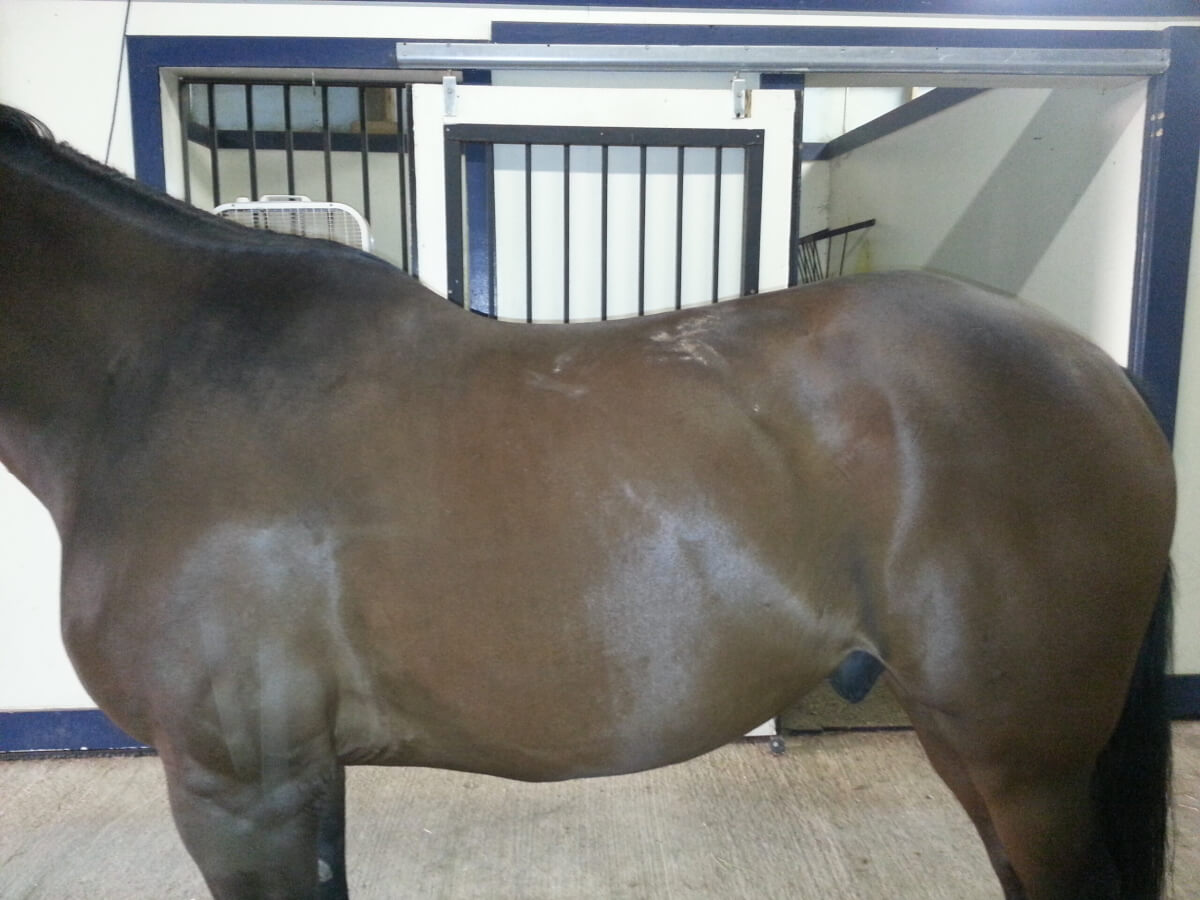
In the first part of this article series, I discussed equine metabolic syndrome and the true underlying causes. Then, I went into the first aspects of true management or treatment of EMS, to benefit your horse now and into the future. The goal of this article series on equine metabolic syndrome is to provide true education as to the underlying causes which are contributing to the epidemic of metabolic ailments in the horse, and then, knowing these causes, you can then make changes to start the process of recovery for your horse. Health for your horse is a true option, but seeking it is just one part. To achieve this recovery, it is important to not only understand what is taking place inside of your horse, but how to target therapy to reverse or improve that condition instead of just seeking a medication or following what others tell you.
Equine metabolic syndrome is not a disease, but as the name suggests, it is a syndrome or grouping of clinical problems in the horse which then together open the door for future health problems. Essentially, these clinical problems make the horse more susceptible to various health ailments from feet problems and lameness, to performance issues, colic, insulin dysfunction, and even Cushing’s disease. The condition of metabolic syndrome is reversible, which has been demonstrated in many clinical cases and supported by research, if it has not progressed too far. Even then, the condition can always be improved as can the health of the horse. It is just a matter of when you choose to intervene that makes the difference. The earlier the better.
There is no ONE thing to do in these horses that will benefit them, but instead, there are MULTIPLE things that need to be done because there are many factors that together created the condition in your horse. In the first part of this article series, I discussed two concepts that must be addressed.
- Lifestyle and the need for movement in the horse
- The Benefits of a Proper Diet
Now, let’s look at a few other factors that greatly contribute to the development of equine metabolic syndrome.
Equine Metabolic Syndrome; Fixing the Feet
The feet or hooves in the horse with metabolic syndrome are often in horrific shape and many are contending with chronic lameness or soreness concerns. The health of their feet are both contributing to and being affected by the condition of equine metabolic syndrome. It is a two-way street and thus, if it is a factor or contributor, then it must be addressed for true long-term health and recovery in the horse.
The feet that belong to your horse are very important. Not only do they require all four feet to ambulate and move around daily, but their feet impact their overall wellbeing as well. Keep in mind that a horse cannot walk around on 3 legs for long, unlike a dog or cat. Their center of gravity is different and thus, they require all 4 feet to move about and those feet ideally need to be working and healthy.
In order to ambulate properly, the horse’s feet must be in balance. The front feet and how they are health wise, impacts the rear feet and vice versa. How the front limbs travel impacts the rear limbs and the overall gait of your horse. The fact is that a high percentage of metabolic horses have sore feet, mainly the front feet, but over time, their rear limbs are impacted. Some are just mildly sore, but others are very lame and suffer from conditions ranging from laminitis to navicular syndrome. Stress, both mental and physical, is a main contributor to the development of equine metabolic syndrome, and when a horse’s feet are sore, there is stress. So, every moment that horse contends with pain in their feet, their level of physiological stress increases and with that, so does the metabolic component. Stress itself, whether from pain or lifestyle factors, impairs cellular function, which is how stress literally kills.
Given this, it is imperative that your horse’s feet be addressed and properly balanced. I realize that most would likely agree that their horse is ‘foot sore’ but they would also say that they are doing what they can for the feet, often through special shoes or pads. My response would be that if the horse is still ‘foot sore’ despite these efforts, then there is much to gain. Even if your horse is not perceived as being sore in the feet, more than likely their feet are in bad shape health and balance wise. Fix them now, rather than later.
How to correct the equine foot is beyond this article, but it has been addressed elsewhere in other articles on our websites. I also have an online course to educate the average horse owner on how to recognize the problem and how to correct it, often themselves by trimming if you are that motivated. The feet are an item that I address in every one of my consultations, whether if it is perceived as being a problem or not. If the owner corrects the issues, then that is one contributing factor removed. The horse will move better, more freely, and most importantly, with less pain. Therefore the condition of metabolic syndrome becomes more manageable.
Now, lastly, please keep in mind that the feet are also the result of EMS, meaning that the feet are often very unhealthy overall. This lack of health in the equine foot is due to the presence of the metabolic syndrome in the horse. Remember, every cell is impacted in EMS, which includes the feet or cells in the hoof. These cells are unhealthy as well and thus, the overall health of the foot in the average horse is poor. As you make changes to improve the metabolic status, the feet will likewise make progress in their overall health.
Step Three: Fix the feet in your horse.
Equine Metabolic Syndrome: Managing the Stress
Stress, both mental and physical, is a huge component of equine metabolic syndrome. The stress response is real and as research will tell us, it can be lethal. The stress response is complicated, but overall, is a state of heightened physiological activity to protect the body of the horse (or person) against a perceived stressor. This heightened physiological state includes altered cortisol release into the blood stream, as well as many other detrimental hormones ranging from epinephrine to glucose, insulin, and altered pituitary function. In fact, one of the main effects of long-term stress is an altered HPA axis, which involves the pituitary and adrenal gland axis. This can lead to an altered release of ACTH from the pituitary gland and an increased release of cortisol by the adrenal glands. All of this together can actually easily mimic insulin dysfunction or Cushing’s disease, and likely in my opinion is the true cause behind the rise in both of these conditions.
Stress comes in many shapes and sizes. If you ask most horse owners if their horse is stressed, they would reply ‘no’ because they view stress as being wired or out of control. In fact, depression is a state of mental stress, and so, all of those horses that are housed on dry lots with little movement and socialization are actually stressed, despite them standing around with their heads down. The same goes for the average horse that is kept in a stall most of the day, or simply deprived from the life that a horse should lead. Much like taking a large breed dog and restricting their lifestyle to a 1000 square foot apartment on the second floor. It is an unnatural state for the animal and it will create health problems due to the stress.
In addition to lifestyle stress, the condition of equine metabolic syndrome creates its own cellular and physiological stress upon the body. In fact, in any state of ‘disease’ there is stress. Just by definition, ‘dis-ease’, implies a lack of ‘ease’ or contentment. The cells in the body of that horse are not working optimally and not producing energy. This impacts them on a physical and mental level. Then we have other factors such as foot pain or soreness, which as mentioned above, will contribute to more stress and exacerbate the equine metabolic syndrome.
Stress and the stress response can be altered, but it is a choice by the owner. I highly encourage the EMS horse owner to evaluate these factors and make adjustments to improve the stress response in their horse. As you make changes, the stress response level will drop and thus, health will improve for your horse, but those changes must be made. In many cases, if not all, I highly recommend using herbal adaptogens to aid in curbing the horse’s response to stress. There are two formulas that I will recommend, using one or the other. These herbal formulas help to control the negative effects of stress, improve the horse’s mood, and by the nature of the herbs, they also impact overall health and metabolic function. I will choose either the Cur-OST EQ Adapt & Calm or the Cur-OST EQ Adapt & Recover in every case of EMS, making this herbal choice a once daily addition to their horse’s regimen, if not twice daily.
Step Three: Manage the Stress
Equine Metabolic Syndrome; Use of Medications
This section will be brief. There are many medications, some old and some that are newer, that are being used to ‘manage’ equine metabolic syndrome and its effects in the horse. These can include some for circulation purposes, such as pentoxifylline, and other for pain, such as Non-steroidal medications. Then there are those more specific to the condition of EMS including metformin and more recently, GLP-1 agonists, being used ‘off label’. When it comes to Cushing’s syndrome, which in my opinion is an offshoot of EMS, the medication of choice is pergolide or Prascend in the horse.
The bottom line is that I try not to use any medications in my EMS patients. My goal is to restore their health and most medications do not achieve this, but are more palliative at best. This is true for many medications in fact. It is a rare situation to find a horse on these medications that is improving and clinically makes a recovery to the point where they no longer contend with EMS or Cushing’s disease. So, if that is the case, then the medications are not tackling the underlying cause of the condition of metabolic syndrome. I am targeting that underlying cause and with that said, I do not require any medications in most of my patients, aside from maybe a short course of a NSAID medication to aid in foot pain management.
Keep in mind that most of these medications are damaging the gut microbiome, not to mention other organs potentially. So, in my world I am aiming to rebalance that gut microbiome in the EMS horse so that the body is healthier. Most of the medications, should I continue them, would work against me and impact the progress that is possible. It is a choice, but to choose properly as the horse owner, you have to be aware of what you are seeking.
Step Four: Eliminate or greatly reduce the medications in your horse.
Equine Metabolic Syndrome: The Proper Use of Herbs
I have outlined most of the factors that need to be addressed in the average EMS horse, if you are truly seeking solutions and recovery. Every step or factor that you address will positively impact your horse’s health to the degree that it is altered. With that being said, by changing those factors, you will be improving cellular health for the long-term, but to further create benefit, herbs can pack a real punch when used properly along with diet.
I have outlined many potential pathways for herbs to impact the average EMS horse. Actually, I have likely created so many pathways or options that most horse owners are confused and for this I apologize. There are many ways to get to that center of that Tootsie Roll Tootsie Pop, but for now, I wish to keep things simple. If you dig deep enough into the science, you can see the different pathways, and this is what keeps me motivated on one end, but yet, frustrated on the other. There are so many options to help tackle the problem, but we often act as if there are no options.
I try to use simple approaches with herbs in the beginning with any metabolic horse. I try to aim and target:
- Chronic Inflammation/ Oxidative Stress
- Gut Health and Microbiome Balance
- Whole Food Nutrition
As noted, you will likely see many different herbal formulas on our website that target equine metabolic syndrome, and in truth, all are very beneficial and effective. Despite this, I still try to keep things simple.
My first line approach is to use the Cur-OST EQ Total Support formula along with the Cur-OST EQ Meta-Support in every case of equine metabolic syndrome. These two blends will address all of the factors above and are clinically and research supported by ourselves over the years.
In one study, we evaluated the impact of the EQ Meta-Support on insulin, metabolic function, and body weight.
In another study, we evaluated the impact of the EQ Total Support on allergy conditions in the horse, which are highly connected with metabolic syndrome and an imbalanced digestive microbiome.
In another study, we evaluated the impact of the EQ Adapt & Calm on the stress response in horses, which was mentioned in a prior section as being an adaptogen to counter the impact of stress in EMS.
The use of these three formulas, being Cur-OST EQ Total Support, Cur-OST EQ Meta-Support, and the Cur-OST EQ Adapt & Calm is my starting point for most cases of equine metabolic syndrome. There is no need to get more detailed or complicated. No need for ketones or any other formula that we offer or discuss. Those other formulas have a time and a place, if needed. I will monitor them in regards to soundness, demeanor, appetite, body weight, and overall look of their feces about every 3-4 weeks and then make changes as needed. I will also do an initial fecal culture to evaluate the horse’s digestive microbiome and then repeat it about every 4 weeks until closer to being balanced.
When it comes to your metabolic horse and their health, keep it simple! I can almost promise you that if you make these changes, your horse’s health and well-being will dramatically improve, all with no medications.
Don’t forget about our online EMS course for more information!
Good luck!
Author: Tom Schell, D.V.M, CVCH, CHN
Nice article. I discovered while studying hoofs function that well balanced hoof is closely related to lymphatic system function. Once we understand this we can start to rehab many illnesses in our horses. I also realized that hoof balance means many things to many trimming schools. The best I have found was the one balancing outside hoof to inside foot – KC LaPierre trim. I used this knowledge to rehab horse with 20 degrees chronical founder who was IR/EMS/Cusings and already 18 y of age