

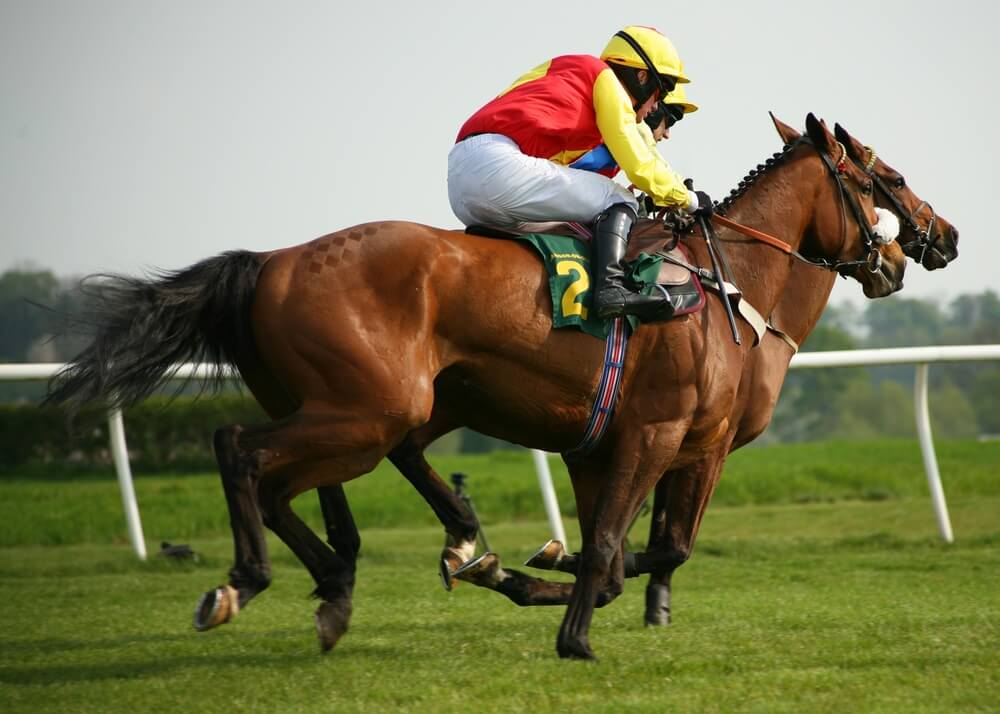
Oxidative Stress in a Small Population of TB Racehorses
Tom Schell, D.V.M., DABVP, CVCH
Introduction:
Oxidative stress is part of the inflammatory process and is the state in which there is an imbalance between the level of free radicals and antioxidants present within the body. Oxidative stress is a normal part of life and influenced by basic metabolic processes such as respiration as well as diet, exercise, genetic factors, environment and even pollutants. Free radicals are oxygen and nitrogen derivatives generated within the body as a response to the before mentioned events and result in positive and negative outcomes. Free radicals are essentially unstable molecules that can induce harm to various cellular DNA, proteins and lipids within the body. On the positive side of things, free radicals are generated by our immune system in response to invaders such as bacteria and viruses. These free radicals create an unstable environment for the bacteria and viruses, with the end goal being death to the intruder. In most normal situations, free radicals are quickly neutralized by antioxidants (vitamin c, vitamin E, CoQ10) present within our bodies before long term damage can occur. In many cases, our bodies will produce naturally occurring antioxidants such as glutathione, while in most situations, we are dependent on our diets to provide the necessary nutrients. If the level of free radicals exceeds that of the antioxidants, then this condition is generally termed oxidative stress. Long standing elevated free radical levels have been implicated in a host of medical conditions in human literature including arthritis and respiratory ailments.
The oxidative stress levels have been measured routinely in hospitalized patients by Timbercreek Veterinary Hospital, PC over the past 5 years and have noted a moderate deficiency of antioxidants in a variety of health conditions in horses. The level of free radicals and antioxidants can be readily measured using a FRAS-4 device which determines the reactive oxygen molecules (free radicals) as well as the antioxidant levels within a blood sample. The free radical levels are indicated as d-ROM, while the antioxidant levels are indicated as BAP (biological antioxidant potential).
The thoroughbred racing industry has been frought with controversy over the years regarding prescription medication usage as well as clinical breakdown of young horses. To the best of my knowledge, oxidative stress has never been measured in this industry until this time. Considering the potential implications of oxidative stress on the body, there could be a connection regarding elevated levels and overall health implications. However, this is just a hypothesis.
Purpose and Design of Study:
In this small study, we evaluated 10 TB horses that were being rested after completing a full season of racing. The horses were housed in a southern state, stall confinement with light hand or hot walking on a routine basis, but no forced exercise. Feeding consisted of a textured grain and high quality grass hay. None of the horses were on any medications or supplements during the course of the trial. We evaluated blood samples from these horses about 8 weeks into their rest period and again 2 weeks post initiating spring training. The results of the assays are seen in figure 1.
The overall goal of this study was to evaluate baseline oxidative stress levels in the rested TB racehorse, while no forced training was occurring. This was done with the notion that we would be eliminating the biggest creator of oxidative stress, that being exercise or training. One would assume that these horses would be well rested and recovering nicely post racing season. After the initial resting samples were evaluated, two horses out of the group were then placed on the Cur-OST® EQ PLUS product during the initial two weeks of training in order to determine the overall impact on performance as well as the impact on oxidative stress levels. Cur-OST® EQ Plus is an all natural proprietary blend of anti- inflammatory herbs, curcumin and boswellia, as well as a host of antioxidants including vitamin C, vitamin E and CoQ10. The product has been researched by Timbercreek Veterinary in several published trials evaluating the impact on inflammation in the horse.
Discussion of Results:
In this study, we evaluated d-ROM (free radicals) as well as BAP (antioxidant levels) within the group of 10 horses. All horses in the study were less than 5 years of age and of mixed genders. They were not on any nutritional supplements or medications during the time of the study, aside from the two supplemented horses placed on Cur-OST®. Based on prior work done by Timbercreek Veterinary Hospital, PC, base line normal values were determined and correlated with prior work done using the FRAS-4 in horses. A perceived normal d-ROM value was set at 150-200 UCARR, while an ideal BAP level was determined to be >2500 uMol/L. A d-ROM value higher than 200 is indicative of increased free radical levels, with the severity of the condition increasing incrementally with a higher number. A BAP level <2500 is indicative of a shortage of antioxidants present within the bloodstream, again with the severity of the shortage increasing incrementally with the smaller number.
When analyzing the data, one is able to see that 8 out 10 or 80% of the horses demonstrated elevated free radicals or d-ROM values as well as a shortage of antioxidants present in the initial blood sample. The highest d-ROM reported in the initial sampling was 449 UCARR, while the lowest BAP level was reported at 1389 uMol/L. These values are indicative of oxidative stress in these patients, which is not what would be expected for a rested animal.
The values were again evaluated two weeks post initiation of spring training, which consisted of controlled jogging for one mile and then gallop for a mile and a half. Prior to training initiation, two of the 10 horses were started on the Cur-OST® EQ Plus product, horses #1 and #7, in order to determine possible influence on oxidative stress levels. Looking at the data in the training study, 3/10 or 30% of the horses demonstrated an increase in antioxidant levels, while 40% demonstrated a rise in free radical levels. What was anticipated in the un-supplemented horse was to see a rise in free radicals in response to intense exercise and a decrease in antioxidant levels due to depletion of reserves. What was anticipated in the supplemented horses was a decrease in d-ROM or free radicals and an increase in the antioxidant levels. Horse #7 demonstrated these results clearly while #1 did not. Horse #7 was the only candidate that demonstrated both a reduction of free radicals and an improved antioxidant potential, which may be attributed to supplementation with the Cur-OST® Plus. It was revealed that prior to the blood sampling, horse #1 did get loose on the track, which resulted in the dramatic rise in free radical levels and depletion of antioxidant reserves. Therefore, we cannot readily determine what horse #1’s resting d-ROM and BAP levels were in response to supplementation.
As a side test, horse #11 was tested immediately after galloping for 1 ½ miles. The d-ROM values are markedly elevated and the BAP levels are lower than what would be considered ideal. These values clearly indicate the ability of intense exercise to create elevated free radical levels and likewise a lowering of antioxidant reserves. These findings are also reinforced by the values demonstrated in horse #1 and horse #5, which both were exercised prior to sampling unknowingly.
Conclusion:
The overall purpose of this small study was to evaluate the oxidative stress levels in thoroughbred horses during a rest period and after initiation of training. Many clinical conditions in humans have been indicated to be connected with a rise in free radicals and thus oxidative stress, but few have been investigated in horses. The process of inflammation is an ongoing research topic in human and veterinary literature and one that is closely tied with oxidative stress. The end results of this study clearly indicate an elevated level of free radicals within the small population during a period of rest as well as during the training period. The question that rises is whether if the production of free radicals is considered to be excessive or whether if the levels of antioxidants present are insufficient to provide adequate protection. Based on this study, 100% of the horses demonstrated less than ideal antioxidant levels, both during the resting period as well as during training. The one supplemented horse, horse #7, did demonstrate an improved and closer to ideal antioxidant level, but still one that is considered to be low. Both horse #1 and horse #7, which were supplemented with Cur-OST®, were reported to be very responsive and exhibited higher energy levels and improved performance by the trainer during supplementation, which is anecdotal , but could be reflective of an improved oxidative stress condition as well as likewise reduction in inflammation. The overall question still to be answered is whether if there is a connection between overall performance and oxidative stress. One could also pose the theory that the increased frequency of breakdowns as well as conditions such as EIPH could be related to inflammation and oxidative stress. Could there be a need for increased supplementation in these animals? This question remains to be investigated.
Author Contact Information: Tom Schell, D.V.M, Nouvelle Veterinary, Inc., [email protected]
Figure 1:
| Horse | Resting d-ROM
Normal 150-200 UCARR |
Resting BAP
Ideal >2500 uMol/L |
Training d-ROM | Training BAP |
| #1 | 196 | 1464 | 419 | 1383 |
| #2 | 402 | 1885 | 174 | 1298 |
| #3 | 235 | 1714 | 256 | 1683 |
| #4 | 283 | 1685 | 241 | 1502 |
| #5 | 271 | 1440 | 497 | 1626 |
| #6 | 172 | 1499 | 329 | 1649 |
| #7 | 313 | 1531 | 218 | 1822 |
| #8 | 306 | 1604 | 260 | 1284 |
| #9 | 286 | 1595 | 279 | 1539 |
| #10 | 449 | 1389 | 301 | 1327 |
| #11 | — | — | 444 | 1468 |