

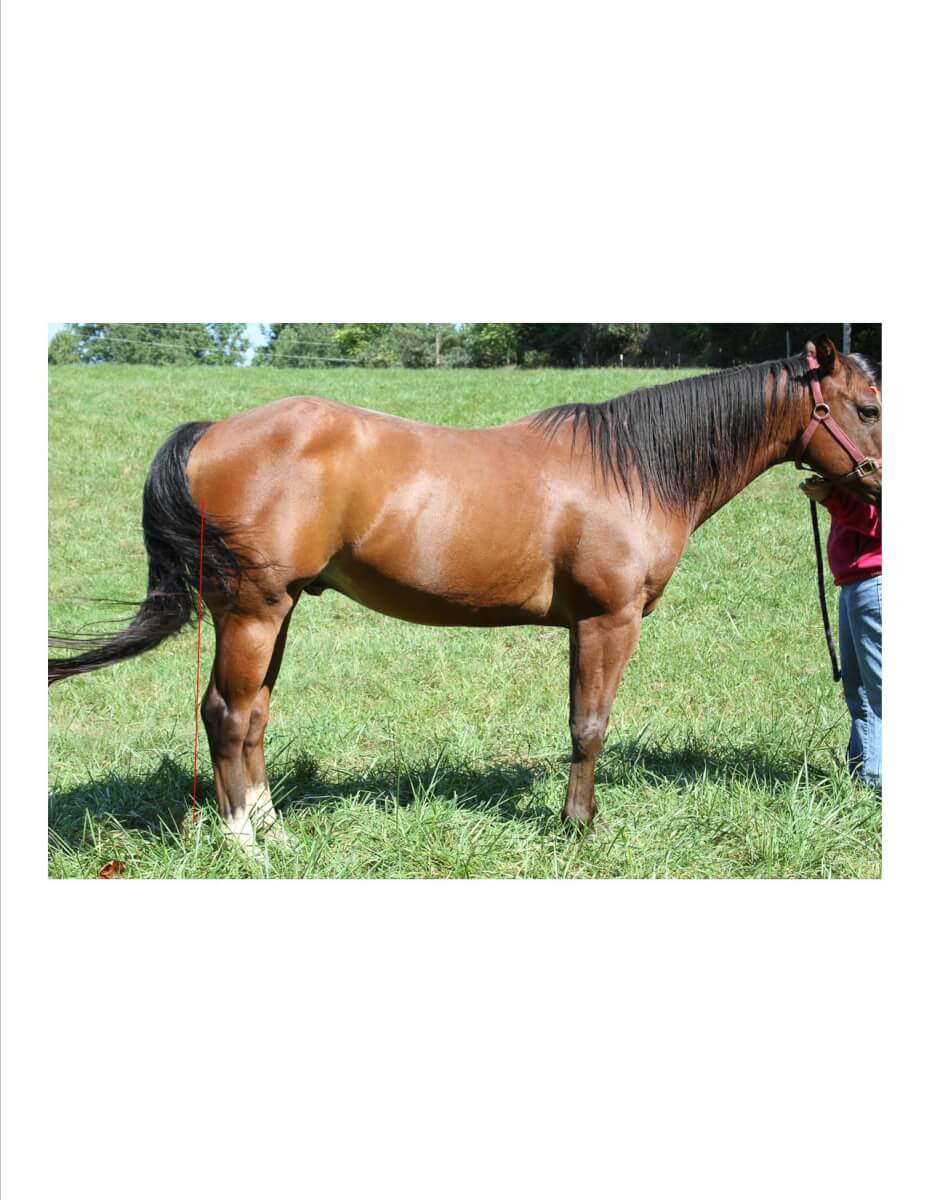
Cushing’s or PPID in the horse is an increasingly common condition. What was once a disease diagnosed only in the elderly or older horse is now becoming common in the mid-teenaged horse as well. The vast majority of horse owners struggle to manage Cushing’s in the horse and while it is a progressive condition, which gets worse over time for most, it is not impossible to manage more effectively and even possibly reverse. To do this, it is vital to understand the causes or contributors.
The details of Cushing’s disease or PPID in the horse are complex and I have discussed them, as well as the clinical signs in another article, which I encourage you to visit for educational purposes. Simply click the link above to go to this article. Instead of rehashing the precise biochemical processes that are going on, what I’d like to address is management of Cushing’s disease in the horse for better outcomes.
The underlying cause for most health conditions in the horse is the same as that for humans or even pets. This cause is chronic or ongoing inflammation which creates cellular damage. This chronic inflammation is the cause behind the process of aging as well, thus, in years past, Cushing’s disease was mainly an ‘older’ horse disease. As the horse ages, like people, more cellular damage is done in the body as a result of chronic inflammation and for many, this damage revealed itself in the pituitary gland region for those horses with PPID. Unfortunately, in more recent times, the median age for a diagnosis of Cushing’s disease in the horse has dropped from around 22-25 years to about 16-18. Why?
This drop in the median age indicates that the body of the horse is experiencing more cellular damage as a result of inflammatory changes earlier in life, as opposed to later. This is a concern, at least to me and mirrors many other health ailments not just in the horse but in humans. Cancer, as an example, used to be a disease related to aging, but now it is plainly evident that the much younger population is afflicted with the condition. As with cancer, we don’t tend to look at the trends with Cushing’s, but more so just target our efforts on some sort of cure. Well, that ‘cure’ will never come, so you’d better put your efforts into prevention.
Cushing’s Disease in the Horse; Why is it happening?
To be honest, if you step back and look at the average PPID or Cushing’s horse, it is plainly evident that most are pre-metabolic or have in the recent past been diagnosed with EMS or equine metabolic disease, plus or minus insulin resistance. What is the relevance?
We are back to the concept of chronic inflammation in the horse. This process starts somewhere and continues to progress, unless it is halted or slowed down. EMS or equine metabolic syndrome is a disease of inflammation in the body. All you have to do is look at the research to see this fact. Going further in truth, based on research, this inflammatory process starts in the gut or digestive system, and then transfers or spreads to other cellular processes in the body of the horse and people. So, when we have a horse with PPID or Cushing’s disease, the chances are pretty high that they are metabolic. This means the cellular damage has been ongoing for quite some time, often years, and now has progressed to where the HPA or hypothalamic-pituitary-adrenal axis is involved, creating the clinical signs of Cushing’s disease in the horse. If you have a horse with metabolic syndrome, the chances are around 60% that they will develop Cushing’s down the road if the condition is not managed properly.
The bottom line with Cushing’s disease in the horse is chronic inflammation, often stemming from the gut and the digestive microbiome. Thus, these are the two areas that I will personally target in the therapy or management of these cases. Many owners do not believe or understand that the gut microbiome is a key factor, and to those owners I recommend having a fecal culture done to assess the microbiome in their horse. This is a good way to quickly demonstrate that things are not quite what they should be in the belly of your horse. When that microbiome is out of balance for a prolonged period of time, then chronic inflammatory changes start and progress. Thus, in truth, many horses with metabolic syndrome or Cushing’s disease more than likely had a microbiome imbalance that has been present since they were very young. It was just never recognized.
Given this, as with most things, prevention is the key! But, despite a horse being diagnosed with EMS or Cushing’s disease currently, it is not too late to step in and make some changes. I believe in the body’s incredible regenerative capabilities and have seen it first hand. Anything is possible but the end results are dependent upon your understanding and application.
Cushing’s Disease in the Horse; Options for Management
Management of PPID or Cushing’s in the horse is not that difficult to be honest. In truth, it just requires a very simple approach and changes to the current regimen. For those owners that follow the recommendations, about 90% see dramatic changes. For those owners that do not follow the recommendations, the positive changes are fewer or sometimes not seen. I think one of the biggest hurdles for most horse owners is stopping what they are doing currently. Many horse owners are using ‘X’ supplement because their barn manager or an advertisement is telling them to, or giving a medication because their veterinarian said so or others are doing it as well. Many are using feed regimens that make no sense to me, as a veterinarian, because a nutritionist told them to do it.
Well, here are the facts. PPID and equine metabolic syndrome are two of the most common reasons for horse owner to set up consultation with me. Almost every one of those cases has a regimen they are following, which includes diet and exercise restrictions. The fact is that if these regimens were the answer for those horses, then I’d expect their clinical signs to be improving, not worsening.
Here is my general approach for those horses with Cushing’s disease:
- Change the diet. Eliminate all grains. Increase the quality of hay being given, as most are being fed very low quality forages with very low nutritional value. The body of your horse needs real food and nutrition to encourage cellular repair and provide antioxidant support. You cannot expect them to heal or mend when being fed low-quality hay and some form of vitamin-mineral replacement supplement. It simply does not work that way.
- Eliminate ALL supplements that are currently being given, no matter what they are. If they are not helping, then they are potentially hurting. Either the supplement is not appropriate for the horse’s condition or the supplement is aggravating the digestive microbiome. Most supplements being used are synthetic based, meaning the ingredients are artificial, and often loaded with preservatives, additives, and even high levels of flavoring. These supplements, often numbering 8 or more per day, are not helping matters.
- Encourage exercise for your horse and mental stimulation. This is not a dry lot we are talking but actual pasture with other horses to allow your horse to be a horse. Afraid of the carbohydrates in the pasture? Keep it mowed down to less than 5″ and it will encourage movement and exercise. A horse that is stimulated and exercised will experience less depression and less depression equates to lower levels of inflammatory proteins. Exercise is also one key way to lower inflammation levels.
- Cur-OST EQ Total Support herbal formula is my starting point in any horse with EMS or Cushing’s disease. This formula, when dosed properly, helps us to control the ongoing inflammation, provide digestive support for the microbiome, and aid in detoxifying the body, which is very important in these cases. There is also a low-level whole-food nutrient supply found in this herbal blend. I dose them twice daily for 14 days, then usually take them down to once daily there after, keeping them on the herbal blend indefinitely, as long as they are improving.
- Cur-OST EQ Adapt & Calm herbal formula is the next formula that I will usually add to this regimen. This is a single herb formula, a concentrated Ashwagandha extract, that provides many clinical benefits to these horses. It is a potent antioxidant herb, thus protecting cells and encouraging repair and regeneration. It is also an herb that benefits the HPA axis in the horse, thus benefitting pituitary and adrenal gland function, not to mention cortisol and ACTH levels. Ashwagandha is also generally calming to the body and mind, thus benefitting those horses with depression and sometimes anxiety. I usually dose this formula once daily but it can be used twice daily.
- Mediations, such as Pergolide or Prascend, are usually discontinued, at least in my patients. I cannot tell you what to do with your horse as you are the owner. What I can say is that in my experience, not only are these medications not providing clinical results or even slowing the disease progression, but they are often creating more problems in the horse. Here is an article on Prascend for your information.
The vast majority of horses with Cushing’s disease or PPID respond to this simple regimen in about 6-8 weeks. Remember? I said to keep it simple and more times than not, the simpler the better. Every wondered in the complex regimens that these horses have been on for many years is creating more problems than it is helping??
For those horses with advanced Cushing’s disease, sometimes we need to step up the game. I always recommend starting with the above regimen and see how they do over the first 6-8 weeks. If they show improvement, then we continue. If the improvement is sluggish, then we may need to either address the gut health more specifically using something like Cur-OST EQ Tri-GUT or even Cur-OST EQ Tri-Guggul if they are really overweight, or we need to use more specific herbal formulas that target the HPA axis and nerve regeneration more effectively. Why nerve regeneration? Because the HPA axis is all about nerve signaling and neurotransmitters.
In these cases, I would opt to include either:
- Secondvet EQ Cushing’s Support
- Secondvet EQ Cushing Support II
What is the difference between these two herbal formulas? The first one contains an herb called Mucuna pruriens, which can act very similar to the drug Prascend or Pergolide. The second formula does not contain that herb. The ultimate question is whether or not your horse is currently on that medication as we do not wish for interactions. Some respond well to the Mucuna pruriens, while others tend to be somewhat sedated, just like with usage of Pergolide.
So, there we have it! The strategy and approach to manage the Cushing’s equine patient. In most cases, it is this simple, but not every case is the same. If you have a complex situation with your horse, then I recommend setting up a consultation to review.
Author: Tom Schell, D.V.M, CVCH, CHN
Recommended Reading:
Prascend or Pergolide in the Horse; Yes or No? – SecondVet
Cushing’s Disease in the Horse; TCM Perspective. – SecondVet
I have a 26 year old gray miniature mare. She was diagnosed with melanoma about 10 years ago and this year tested positive for Cushing’s. Could the melanoma have caused the Cushing’s? I would prefer not to put her on pergolide. She is definitely starting to look thin and frail. Do you think your supplements would make a difference with her?
Hi have a 20yr Tb 148 with cushing what is best natural medicine
You will all need a consultation.
Thank you for this information, Dr. Schell. I wish I had caught my horse’s Cushings earlier. Prascend has helped with many of the symptoms but the titration process over 2-3 months just to get him to 1 mg daily has been murder, especially in record heat & humidity. He immediately went off any concentrate (hay balancer & low NSC non-grain pelleted feed). I would love to try your SV Equine Cushings Support II, but I need to know he will eat it. Can one buy a smaller sample for this purpose, since none of the herbal mixtures are returnable? Thanks so much for your time!
Hi. We do not offer samples of any herbs or our formulas unfortunately for various reasons. If you are concerned about your horse being picky and refusing the herbs, then there is a reason for this pickiness and you can see the reason inside of your comment and what is causing it. Your regimen and current diet is impacting your horse’s digestive microbiome negatively and therefore creates the picky palate. This is the root of your horse’s health issues and if you can correct this, he will be well on his well to health. I’d encourage you to read our articles and see if you can understand the condition of EMS/PPID and how digestion plays a role. Many articles there to guide you. Good luck!
I have a cushings horse on pracend. I’d like to discuss options.