


Skin problems are very common in the world of veterinary medicine and likely impact the horse just as much as any other species, including humans and companion pets. The skin is an organ system of itself and at the mercy of other organ systems. They must work together for health and balance, but when things are out of whack, problems are common such as rain rot, fungal infections, and other forms of dermatitis. The answers are right there if you care to look deeper, but all too often we are looking for solutions outside of the body of the horse instead of resolving from within. Here is a neat case study submitted recently.
The skin is an organ system of itself and in truth, is meant to protect the internal contents of the body. The skin is like a shield of armor and designed to prevent invasion by harmful chemicals, elements, bacteria, viruses, and fungal invaders. When you have skin problems ranging from allergies to dermatitis or skin infections, it is a signal that the skin is not healthy. This may be obvious, but the path to resolving or improving the situation is generally not. When the skin is not health in the horse, or any other species, it is a sign of imbalance and also a warning sign that things could progress in a more serious direction if not paid attention to.
The skin is dependent upon proper nutrition and blood circulation. When there is a lack in either or both, problems develop and that suit of armor is not health and able to protect. Given that the skin does not gain nutrition from the outside world directly, it implies that it must receive it from another organ system. The same goes for the circulation to deliver those nutrients along with oxygen. The skin is dependent upon other organ systems. So, when we have a problem with the skin, it is a sign that another organ system, or two, is not healthy. The body of the horse is compromised and most times, we fail to truly see this weakness. Most just see a skin infection, redness, itchiness, scaling, scabs, or simply dandruff.
When we fail to see what is right in front of us, then we seek solutions outside of the body, which are often foreign and honestly, very harmful in many cases. What are the most common therapies?
- Topical medications from corticosteroids to antiseptics and antibiotics all of which impair that normal microbiome of bacteria that is present on the skin and in the long-term, create more harm.
- Shampoos with chemicals, antiseptics, and antimicrobial agents which again harm the normal microbiome of the skin and are often drying, removing the desired oil layer of protection from the skin.
- Oral and injectable corticosteroids and antibiotics, often given long-term for months due to failing to resolve the condition. These are damaging to the entire body in the long-term especially, impacting the microbiomes located throughout the body.
The number one organ system involved with skin problems in the horse, and other species, is the digestive tract. The health and balance of the gut microbiome dictates the health and the balance of the entire body. If the gut microbiome is out of balance in the horse, it will weaken the skin organ system secondarily, just as it may weaken a tendon or hoof. Nutrients are not absorbed and processed and chronic inflammation is common place. The skin ends up suffering and manifesting with many ailments from allergies to rain rot or dermatitis conditions.
Instead of addressing the obvious problems, most owners turn to the therapies mentioned above, and despite some horses showing improvement, they are still out of balance and just as unhealthy as they were in the beginning, simply because the root problem was not addressed.
Here is a case study that demonstrated marked improvement in a short period of time with the right approach.
A mid-aged Paint mare was experiencing chronic or long-term rain rot of dermatitis, involving both rear limbs in the cannon bone region. As mentioned, the condition had been present for many months and the veterinarian had prescribed every therapy mentioned above from topical therapies to long-term antibiotics. Nothing was helping and the horse just waxed and waned. The owner consulted our daughter, who was her barefoot trimmer and together they decided that the diet should be cleaned up and that the Cur-OST EQ Immune Support would be added to the regimen as the only supplement.
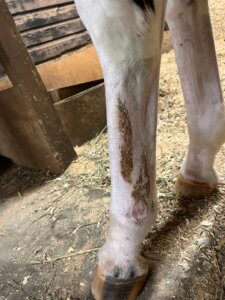
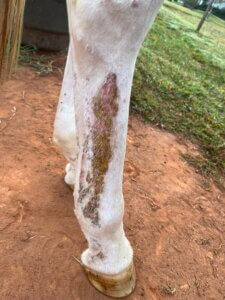
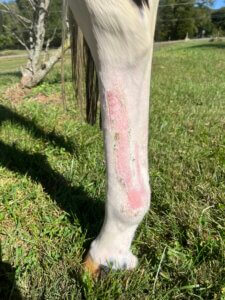
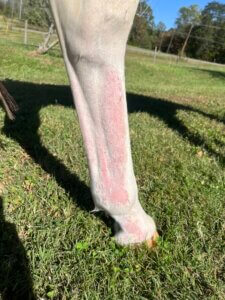
The first two images above are the limbs at the starting point and just 5 weeks later, the legs looked like those in the last two images. The scabbing and associated drainage was gone, the skin was nice and pink, very healthy and growing back hair.
So, how does this happen?
Mushrooms are one of my most favorite herbs or really foods, all depending on how you look at them and use them. I’ve written a couple of articles on these wonderful gems, which the links can be found below. Given the articles, I will not go into detail here but will leave that exploration up to you to discover. The long story short is that these foods or herbs, being mushrooms, are packed with whole food nutrition and additionally, they contain potent polysaccharide molecules, which are often unique from one species of mushroom to another. These polysaccharide or sugar molecules impact digestive health, promote good digestion, aid in balancing the digestive microbiome, and aid in restoring balance to the immune response. Everything one could ask for in a food or unique herb. Not too potent and not too weak. Just right for almost every horse and every person. The key here in this case and every case, is to STOP DOING THAT WHICH IS CREATING HARM OR THE IMBALANCE. This means the diet must be altered and improved and most junk supplements with synthetics need to be eliminated. Mushrooms are powerful but cannot override the harmful effects of bad choices. It is the K.I.S.S. rule in truth, “keep it simple stupid!”
Author: Tom Schell, D.V.M, CVCH, CHN
Recommended Reading:
Medicinal Mushrooms and the Horse; A Veterinarian’s Perspective
Another educational article, thank you. I use this product, it is invaluable for my Metabolic Horse, as his body works at removing toxins from the lipomas (fat pads) the Immune Support supports his body and helps with the skin eruptions. Life style changes and feed change to Whole Foods helps get the full benefit of this product.
What is the Nature of the Immune Spectrum Formula?
I looked up the Nature and properties of each mushroom while 2 appear to be Neutral, 2 Slightly Cold, 2 slightly warming. My conclusion is likely inaccurate. It would be helpful to know. Thank you!
Hi. Most mushrooms are considered ‘neutral’ in energy, meaning not too hot or too cold. The exception would be Cordyceps, which would be very mildly warming to the body. The others for the most part are considered neutral. Mushrooms are tonics in nature, helping to rebuild the body in a variety of ways. Most are nourishing to various degrees, but each will have added benefits to help either rebuild, support Yin, support Yang, or maybe help to reduce dampness or toxin buildup. Thanks