Tom Schell

Equine Sports Injury Management For Optimal Outcomes

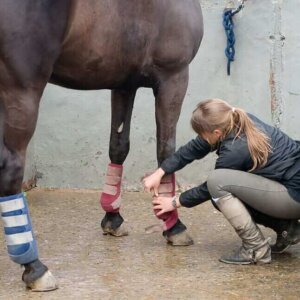
Sports related injuries are common in equine competitions and training.  They are expected to occur and are likely, due to the extreme stress placed upon joints and other supporting structures, often exceeding normal limitations.  The injuries can be a short term nuisance or many prove to be long term, career ending problems that drag on for years.  How we approach these injuries from both a preventative and therapeutic perspective can dictate the outcome and often improve our odds of success.  In order to understand the options before us, we have to understand what is taking place within that animal.

Equine Sports Injury Management For Optimal Outcomes Read More »

Getting the most out of your horse’s joint injections

Joint injections are all too common in today’s equine world and one of the main reasons why I opted to go to the opposite side and seek alternative options, as a veterinarian.  The most common reason for their use is joint disease, mainly arthritis, with the intent or purpose to alleviate pain and prolong or improve performance.  In many, their use is warranted while in others, not so much.  In either case, if we do decide to go that route, with an injection, we need to understand the pros, the cons and what options are before us to help extend the effects of those injections.  After all, they are not cheap and do not come without harm.

Getting the most out of your horse’s joint injections Read More »

Why Is My Horse Fat? A Guide to Equine Body Condition.

Why is my horse fat?  That’s a good question and one that I was asked routinely during annual preventative wellness checks on my patients.  It is also a question that I get asked in emails all too frequently.  I think it is a good question and for those that ask the question, it is a sign that they recognize that a problem exists, thus opening door for correction.  An overweight horse is not a sign of good health and over time, can lead to significant health problems and increased morbidity, not to mention mortality for some.  Seeing that the problem is present is the first step, but taking the following steps to conquer the issue at hand means that we must understand some basic concepts.  

Why Is My Horse Fat? A Guide to Equine Body Condition. Read More »

Gas, bloating and GI upset in Dogs

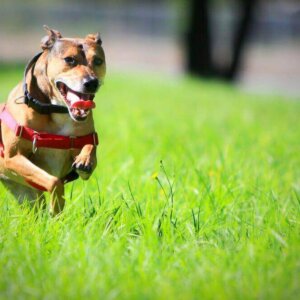
Our canine companions are no different than you or I, or for that matter horses.  We all have a gastrointestinal tract that sometimes can get out of whack, not functioning at desired levels, resulting in gas, diarrhea, bloating and even intermittent vomiting at times.  It can be difficult to contend with, especially in the middle of the night or if your pet is left unattended by day while you work, coming home to a mess.  Why does this happen and is there something we can do or not do to improve the situation?

Gas, bloating and GI upset in Dogs Read More »

Equine Performance & Stamina; Achieving Optimal Results

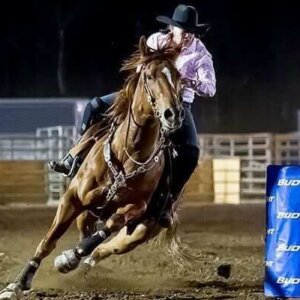
The performance of an equine athlete is vitally important whether if we are talking Dressage, Jumping, Western Pleasure, Barrel Racing or on track TB or QH racing. One of the biggest determinants of performance is stamina.  Without stamina, almost always, performance is reduced on various levels.  So, what determines one or the other? What dictates performance in that equine athlete and considering that stamina is involved, what options do we have to improve the outcome?

Equine Performance & Stamina; Achieving Optimal Results Read More »

Equine Allergies – Understanding & Providing Solutions

Itching, scratching, coughing, red eyes, hair loss and oozing skin bumps….all related to allergic conditions in the horse and a common occurrence. Current approaches to therapy are often complex and unrewarding, leading to the allergic condition often becoming worse with every passing year, fluctuating from season to season.  All of these clinical signs are evidence of a deeper seated problem in the patient, and through a better understanding, we can take a different approach which often yields better management. As with most issues though, in regards to chronic disease, we have to see the root, the cause, and not so much focus on the clinical signs that are present.  

Equine Allergies – Understanding & Providing Solutions Read More »

Assisting the Geriatric Canine Patient

We all age, including our canine companions.  The goal is to age gracefully.  Quality of life is far more important than quantity of life, although both would be ideal, right?  Is it possible to improve not only quality but also longevity?  The answer to this is yes, but the right approach needs to be taken, making it more of a lifestyle than a passing fad or just a regimen. Our canine pets depend on us to make the right choices.  The more understanding we have, the more informed we are in the choices we make.

Assisting the Geriatric Canine Patient Read More »

Equine Back Issues; Understanding & Better Management

A pain in the back; SI problems, neck stiffness and generalized back pain. Back issues and complaints in the horse are quite common, leading to lost work, poor attitudes and overall moderate difficulty in management.  Current therapies are often unrewarding, especially long term, as the main cause or root is often overlooked.  Through a better understanding of both anatomy, physiology and contributors, management becomes easier and the horse more responsive without the long term need for medications or injections.

Equine Back Issues; Understanding & Better Management Read More »