

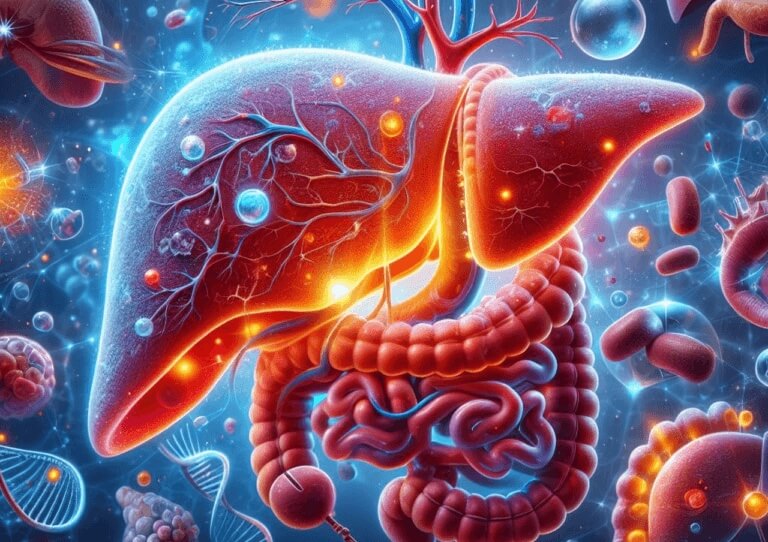
In alternative medicine, specifically Traditional Chinese Medicine (TCM), their philosophy often revolves around imbalances to specific organs, which can lead to health concerns in the horse and people. Additionally, seasons can play a huge role in those specific organs, often with one season correlating to a certain organ. The liver is one main organ in TCM which is discussed and focused upon and the season associated with it is often viewed as the springtime. It is no coincidence that many health problems in the horse tend to arise around this time period of spring, thus signifying a need to pay attention to the liver pathway. So, what is the situation and what can be done for your horse? It is an important one, impacting many, especially the easy keeper type.
The liver is a main organ in the physiology of the body, playing a vital role in almost every facet of health for the horse. The horse is very similar in regards to the liver as ourselves, but with one exception. They do not have a gall bladder for storage of bile secretions, but do have the biliary tract or ducts for delivering it to the small intestine to assist with digestion. Despite not having a gall bladder, the horse is prone to ‘gall stones’, which can form in the biliary duct and create major problems. Not a very common situation, but when it happens, there are generally few solutions that modern medicine can offer the horse due to the inaccessibility of the liver in surgery due to size and position.
The liver is involved with many facets of the horse’s health from immune support and detoxification to sugar regulation and digestion. There are many roles that the liver plays in normal physiology and being connected to the digestive system via the biliary ducts, problems can happen where microbiome imbalances feed up that tree and create liver ailments. Additionally, any food or chemicals that are ingested by the horse are likewise sent to the liver via the portal blood circulation for further processing and detoxification. This is partly where we can run into liver dysfunction on various levels, not just due to imbalanced digestive microbiomes feeding into the liver, but potentially toxic substances ingested by the horse either in the form of medications or even various supplements or foods can overload the organ and create damage.
Overall, the liver is a vital organ to the horse and thus, something that is important to pay attention to. In general terms, think of the liver as being a huge coffee filter. It can and will become plugged up or congested and often needs to be cleansed. This is where alternative medicine comes into play.
TCM views the liver as being associated with the element of ‘wood’ and thus there are ‘wood’ personalities, which are often defiant, stubborn, and often tense at times. The liver in TCM is perceived as being responsible for the smooth movement of energy or Qi in the body, and when the liver is stressed or imbalanced, this energy builds up or stagnates, creating what is termed ‘Qi Stagnation’, not just in the horse but any living body. This energy stagnation can manifest clinically in many forms, but is often seen as a behavioral change, stubbornness, anger and often gas expression in the horse. It can also manifest as a gas colic or a painful horse that tends to improve after a trailer ride or alteration in their focus. The pain is often blunt and comes and goes, often with just a change of focus on the part of the horse.
Now, the liver philosophy goes further. The liver likes to be nourished in TCM and any form of alternative medicine and the liver is associated with the color of green, specifically in TCM. Thus, green foods and herbs help to nourish the liver, detoxify it, and keep it overall happy and clean. When the liver is happy and clean, moistened if you will, then it is able to do it’s job better and keep that energy moving. This deficiency of nourishment to the liver, in TCM, is termed “Liver Blood Deficiency”, or when more severe it is “Liver Yin Deficiency”. This is generally seen clinically not just by the Qi stagnation, but also dryness to the body with dry skin, dry hooves, weak and dry tendons and ligaments, and drier feces especially inside. When the liver is not happy, energy cannot move and accumulates and energy is needed to move or circulate blood in the body. So, in prolonged cases of liver deficiency, this Qi stagnation often progresses to Blood Stagnation, which is more severe and serious. Pain associated with blood stagnation in the horse is more sharp in nature and persistent. Thus, often seen in the persistent colic with belly pain, a laminitis patient, foot soreness, and even tendon or ligament injuries at least in the acute stage.
One last thing to mention is that improper flow of the energy or Qi in the body of the horse will and can impact digestion. Thus, when we have stuck or stagnant energy, gas will accumulate in the bowel and create colic cases sometimes or just frequent gas in the horse, often smelly due to internal heat or toxin buildup. This impact on the digestive tract will also alter the digestive microbiome and impact proper digestion, often leading to wet feces or mucous coated feces. This also spreads to other areas of the body, such as joint stiffness and stocking up. This is what is termed ‘Ama or Dampness’ accumulation in the body of the horse. A very important topic.
Springtime and the Equine Liver
Spring is the season associated with the liver and this is the season viewed as being a time to ‘cleanse’ or detoxify the liver in the horse or any living being. Winter time can take a toll on the body of the horse mainly due to stagnation or lack of movement due to weather and other factors. Additionally, many horses are overfed or actually over nourished relative to their need during the winter and all of that food and possibly additives or preservatives, can literally bog down the liver. Again, think coffee filter. Thus, Spring is the time to cleanse that liver and remove the impurities and stagnation that has accumulated in the prior season.
Many conditions arise during the Spring and Summer seasons in the horse including allergies, breathing problems (COPD), and eye conditions such as equine recurrent uveitis. These conditions tend to improve or disappear during the fall and winter because the liver is not the main organ involved at that time period. However, the liver is involved directly with these conditions and when Spring arrives, the liver exposes itself along with its stagnation. Thus, these conditions manifest. One could say it is because bugs come out during this time or that pollen is more prevalent, and while that is true, the liver is the one that is responding to these allergens via the microbiome and the immune response. Thus, the liver is the main organ to be focused upon, which then indirectly impacts the others.
There are many ways to support the liver in the horse during the Spring season. Food or proper forage is number one, as this ‘green’ food will support liver nutrition and often detoxification. Thus, one reason why I focus upon high quality forage in the horse, such as alfalfa, to help support the liver, support detoxification, and directly impact the digestive microbiome. Additionally, pasture access is important as is the forage growing there. One plant found in the pastures and also used in the herb form is Dandelion Leaf or Dandelion Root. While this is perceived to be a weed, it is a highly medicinal plant, benefitting the liver, the digestive microbiome and overall detoxification. It is cooling in nature, thus benefits hot and moist health ailments such as allergies or weepy eye problems and has a mild diuretic effect, thus benefitting cardiovascular and kidney health not to mention those horses that stock up. I’m all about whole foods and in most cases, these foods benefit and impact the liver either directly or indirectly. Here is an article on whole foods.
Going further, some horses need that nutrition for the liver, while others just need to cleanse that liver or drain it. There are many herbs that we use for this purpose with Turmeric or Curcumin being number one on that list, but additionally Boswellia is utilized as is an herb called Commiphora Mukul or Guggul. These are powerful herbs and the last two are mentioned in the Bible, being Frankincense and Myrrh. Guggul is often combined with digestive herbs such as Triphala and found in formulas like the Cur-OST EQ Tri-Guggul or the SV EQ Gut Blend II. It is a very powerful, but bitter herb that works well with others to cleanse the liver and literally ‘scrap’ away toxins from all areas of the body in the horse. We use Turmeric and Curcumin along with Boswellia in many of our Cur-OST formulas for general support of the liver and removing that stagnation component which is often associated with painful conditions in the horse ranging from tendons to joints. Guggul is used in a couple of formulas and more information on Guggul can be found in this article on Guggul.
Overall, if you have a horse, the Spring is the time to pay attention to that liver. If you get it happy and healthy now and maintain it, then many problems associated with the summer become nonexistent or at least more easily managed. This even includes fly accumulation on the horse and the associated irritation. Nutrition is important for many reasons but so is overall cleansing of the liver, which infers detoxification. This concept of liver support is vital for every horse, but especially those that are overweight and prone to metabolic ailments. This is why one of the main formulas that I highly recommend to this body type in the horse is the Cur-OST EQ Total Support. Many benefits to this herbal blend from general liver support and detoxification to whole food nutrition. Don’t just use Spring to address the liver and play catch up. Support the liver in your horse year around for even better health and soundness.
Author: Tom Schell, D.V.M, CVCH, CHN