

Tom Schell

Nutrition Implications: Fact or Myth

As a veterinarian, I have to confess that after almost 20 years of clinical practice, I failed many of my patients due to lack of knowledge about proper nutrition. Being a student in veterinary school, honestly, there was not much focus on nutrition.  In some courses, there was mention of various nutrients, but not much pressure to use the diet as a tool to aid in disease management and recovery.  The good news is that after all of those years, I did ‘wake up’ and realize the importance and today, my approaches are much different for myself, our pets and those horses that I have contact with on a daily basis.   It wasn’t always this way and I discover more each day, which can be exciting!

Nutrition Implications: Fact or Myth Read More »

Horse and Dog Health; The Impact of Free Radicals and Oxidative Stress

Free radicals are an important entity in chemistry and in health, having been researched for many years with connections to cellular changes that may impact overall health and aging.  A free radical is a molecule that has an unpaired electron in the outer shell, which creates instability and a high rate of reactivity with other molecules.  Free radicals are produced as a normal part of cellular respiration or energy production, but can also be generated as a consequence of environmental factors, stress, poor diet, food additives, medications and genetics.  In general, they can have huge negative impacts on overall health, performance and sustainability, but the good news is that with understanding, we also realize that there are things we can do to minimize the damage inflicted.

Horse and Dog Health; The Impact of Free Radicals and Oxidative Stress Read More »

EPM and the Immune System; A clinical perspective

Do you have a horse or know of one impacted by EPM? Equine Protozoal Myeloencephalitis (EPM) is unfortunately a common disease in the horse, impacting hundreds, if not thousands every year.  The outcomes for each case can vary dramatically, resulting in a huge expenditure for the owner and an uncertain future for the horse.  Give the huge variability in outcomes despite newer treatment options, one is left asking ‘why’ and what more can be done to aid in prevention and therapy to help increase the success rates. Maybe it is time to rethink our approach to these cases in order to maximize the outcome.

EPM and the Immune System; A clinical perspective Read More »

Which Cur-OST formula is right for my horse?

Our Cur-OST® formulas target a healthy inflammation response and were created originally to benefit Dr. Schell’s equine patients, helping to improve overall health, joint mobility, performance and reduce aches & pains. There are many joint and health supplements available for horses, but the goal with our formulas is to first provide natural ingredients and herbs that are effective in their actions and second, provide the highest levels based on research to get those results.  The choices between the Cur-OST® equine formulas may appear confusing but really, there is a strategy for each formula.  The most common question we have is ‘which formula is right for my horse?’.  The answer is not straight forward considering that each horse is an individual, but hopefully we can outline the goals and uses for each formula.

Which Cur-OST formula is right for my horse? Read More »

Why Your Joint Supplement May Not be Working

Daily aches and pains are one of the biggest problems we deal with as we get older, but they are also very common in our pets and horses, especially if they are athletes.  The aches and pains are often associated with joint deterioration on many levels with resulting cartilage degeneration, which creates discomfort.  Most people resort to traditional joint therapies, including glucosamine and chondroitin, in addition to various pain medications such as non-steroidal anti-inflammatories to help control pain.  Despite these efforts, many are still seeking options to help get to the next level of comfort not only for themselves, but also for their equine companions and pets.  Let’s take a look at what is going on and what other options may be available.

Why Your Joint Supplement May Not be Working Read More »

Evaluation of Berry and Citrus Herb Formula in Equine Metabolic Patients

Evaluation of Berry and Citrus Herb Formula in Equine Metabolic Patients

Tom Schell, D.V.M., CVCH

Introduction:

Metabolic syndrome is a term used referring to a group of risk factors that contribute to an increased risk of heart disease, diabetes and stroke in people. In horses, metabolic syndrome is closely connected with poor sugar metabolism, insulin dysfunction, circulatory disease and laminitis.  In both groups, the risk factor that is most prominent is obestity or excessive body condition, which then tends to increase the risk for development of other factors and further contribute to patient health deterioration.  

Evaluation of Berry and Citrus Herb Formula in Equine Metabolic Patients Read More »

Tying Up and Rhabdomyolysis in Horses

“Tying Up”, myositis, Monday Morning Disease and azoturia all refer to which is more technically known as Equine Rhabdomyolysis Syndrome in horses. It can be a very common problem in some disciplines and breeds.  The most common breeds involved in the condition include the Quarter Horse, Thoroughbred, Arabian and the draft horses.  In various research papers, tying up has been noted in approximatley 4% of Arabian Endurance horse and up to 10% of racing Throughbreds.  Given the increase in the incidence and possible clinical repercussions of the condition on the performance of the horse, there has been much research trying to unravel the mystery as to what exactly causes the problem.

Tying Up and Rhabdomyolysis in Horses Read More »

Ear Infections in Pets; How to Manage

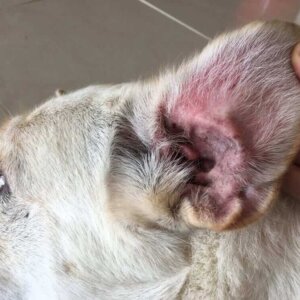
Scratching, digging and rubbing their head on the ground can all be signs of an ear infection in your pet.  The problem can be not only irritating for the pet, but also for the owner as it can often mean a loss of sleep at night for both parties.  Ear infections are more common in dogs than cats with many causes and predisposing conditions.  In most cases, the problems are easily resolved with medications, but in others, the condition can be recurrent, happening over and over again.  The good news is that there are options!

Ear Infections in Pets; How to Manage Read More »