
herbs

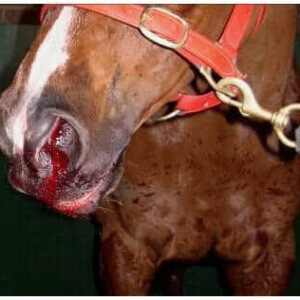
NOSE BLEED EIPH horse

Exercise Induced Pulmonary Hemorrhage in the Horse

EIPH or exercise induced pulmonary hemorrhage is unfortunately a common condition in equine athletes, affecting upwards of 40% of race horses and an estimated 62% of QH’s involved in racing, including other disciplines such as barrel racing.2  It is one of the main causes of decreased performance and also one of the more common respiratory problems found in competitive equine athletes, especially when involving epistaxis or nasal bleeding.  EIPH can be very frustrating for some trainers, due to the fact that a specific cause in each case is often not determined and response to therapies can decrease over time.  In many instances, the equine athletes are able to maintain higher levels of performance, while other are forced to retire.  As with many equine health conditions, with a better understanding, sometimes we can implement therapy options to improve the outcomes, helping to keep performance to a high level.

Exercise Induced Pulmonary Hemorrhage in the Horse Read More »

Equine Navicular Syndrome and Heel Pain; New Perspectives

Navicular syndrome is a very common problem in the equine industry, likely impacting 30% or more of horses, dependent on the breed and discipline. We see this condition commonly in the western disciplines but also to varying degrees in other sports, including jumping, dressage and even racing. There are many factors that contribute to the problem, which can make it difficult at times to manage.  All too often, though, we tend to wait until the condition has progressed, with irreversible damage, before we properly intervene.  With a better understanding, hopefully we can recognize the condition sooner, see contributing factors and produce better results for the patient in the long term.

Equine Navicular Syndrome and Heel Pain; New Perspectives Read More »

shutterstock 41961568

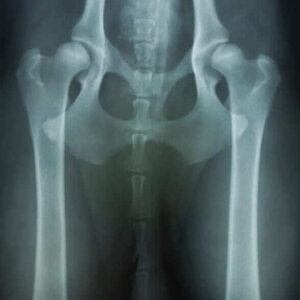
Canine Hip and Back Pain; Management Options

Our canine companions are not immune to joint concerns, but like us, they often live with day to day discomfort and pain.  They want to go, jump, play, but are limited in what they can do. The hips and even back are main sources of problems, creating moderate pain, limited range of motion and creating a modest dependence on pharmaceutical medications just to keep them moving.  Their problems are very similar to ours, as humans. We have choices and options which may provide a higher level of quality of life.  All we have to do is understand the process and see the possibilities.

Canine Hip and Back Pain; Management Options Read More »

Anhidrosis in the Horse; Thoughts and Considerations

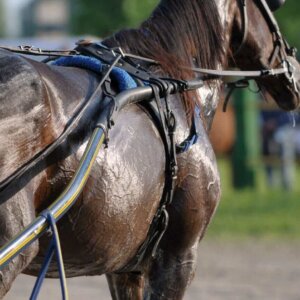
Anhidrosis is a common problem, impacting upwards of 10% of horses, usually subjected to high heat and humidity for prolonged periods of time.  It is an important condition, as its presence can impact stamina, recovery and overall ability by the owner to exercise their horse.  Sweat production is vital for the body, not only to aid in detoxication, but also in thermoregulation, so when the horse cannot sweat, they can quickly overheat.  Solutions are sporadic, with some of these therapies helping a few horses, while others do not benefit.  Hopefully, if we take a deeper look into this condition, we can arrive at some potential options to improve management.

Anhidrosis in the Horse; Thoughts and Considerations Read More »

Lyme, Anaplasmosis, EPM in the Horse: Relapses, Thoughts and Theories

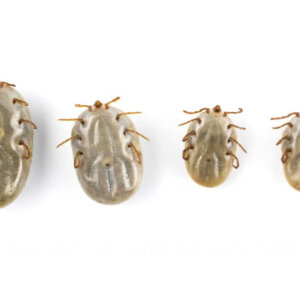
The opposite of health is disease and in the horse, we have many chronic and likewise frustrating health conditions.  Many include lameness as a result of direct joint or soft tissue damage, which continue to inflict pain and lameness on the patient as a normal course of the condition.  In other cases, we deal with the increasing incidence of Lyme disease, Anaplasmosis and EPM, which in an of themselves can be frustrating due to the often high recurrence rate in certain patient groups.  Given this group of chronic diseases, which often come with hefty ongoing medical costs and variable outcomes, we need to step back and really evaluate the conditions and how the patient is responding if we are to come up with better solutions.

Lyme, Anaplasmosis, EPM in the Horse: Relapses, Thoughts and Theories Read More »

Supplementation: What is the Goal and How to Achieve it.

The term ‘supplement’ can either be a noun or a verb, implying something that completes or ehances something else, or in the case of a verb context, to add an extra element.  In the health industry, we really use the term in both contexts or sometimes both at the same time.  We may supplement our horse’s or even our own diet with a supplement, using both the noun and verb, which is commonplace.  However, what are we really doing and what are we trying to achieve?  Through a better understanding, we may be able to arrive at that goal a little sooner and even reduce end costs in the long term.

Supplementation: What is the Goal and How to Achieve it. Read More »

Nutrition Implications: Fact or Myth

As a veterinarian, I have to confess that after almost 20 years of clinical practice, I failed many of my patients due to lack of knowledge about proper nutrition. Being a student in veterinary school, honestly, there was not much focus on nutrition.  In some courses, there was mention of various nutrients, but not much pressure to use the diet as a tool to aid in disease management and recovery.  The good news is that after all of those years, I did ‘wake up’ and realize the importance and today, my approaches are much different for myself, our pets and those horses that I have contact with on a daily basis.   It wasn’t always this way and I discover more each day, which can be exciting!

Nutrition Implications: Fact or Myth Read More »

Evaluation of Berry and Citrus Herb Formula in Equine Metabolic Patients

Evaluation of Berry and Citrus Herb Formula in Equine Metabolic Patients

Tom Schell, D.V.M., CVCH

Introduction:

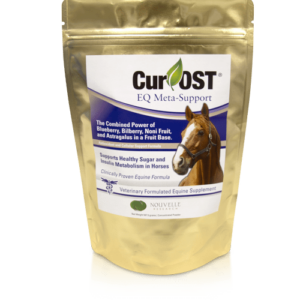
Metabolic syndrome is a term used referring to a group of risk factors that contribute to an increased risk of heart disease, diabetes and stroke in people. In horses, metabolic syndrome is closely connected with poor sugar metabolism, insulin dysfunction, circulatory disease and laminitis.  In both groups, the risk factor that is most prominent is obestity or excessive body condition, which then tends to increase the risk for development of other factors and further contribute to patient health deterioration.  

Evaluation of Berry and Citrus Herb Formula in Equine Metabolic Patients Read More »

Sport Horse Lameness: Raising More Questions than Answers

Lameness and medical concerns in the sport horse have increased dramatically and likely are attributed to the increased use and performance level of these animals.  To keep up with medical demands, we have seen an increase in our diagnostic capabilities and technologies as veterinarians.  The concern that I have, as a clinician, is that the drive for these ever increasing technologies to aid in our diagnosis is rising, but it is not being counter driven by new therapies to manage the problems discovered.  We raise our capabilities, hopefully to detect problems earlier, but yet our intervention techniques have not changed, giving the same results in the end for the patient. I think at times, we are missing the obvious when it comes to assisting these patients.

Sport Horse Lameness: Raising More Questions than Answers Read More »