
tom schell D.V.M.

Evaluation of Berry and Citrus Herb Formula in Equine Metabolic Patients

Evaluation of Berry and Citrus Herb Formula in Equine Metabolic Patients

Tom Schell, D.V.M., CVCH

Introduction:

Metabolic syndrome is a term used referring to a group of risk factors that contribute to an increased risk of heart disease, diabetes and stroke in people. In horses, metabolic syndrome is closely connected with poor sugar metabolism, insulin dysfunction, circulatory disease and laminitis.  In both groups, the risk factor that is most prominent is obestity or excessive body condition, which then tends to increase the risk for development of other factors and further contribute to patient health deterioration.  

Evaluation of Berry and Citrus Herb Formula in Equine Metabolic Patients Read More »
Why so many formulas, Dr. Schell?

I get asked this question a lot, especially when it comes to the horses.  In reality, back in 2006, when we were first researching and seeking a solution for our older equine patients with osteoarthritis, I thought I had a fix for every solution.  The original formula we utilized was our EQ Plus product and based on the results we were seeing, I believed that the formula would provide relief for every patient.  In reality, as time went by, I came to realize that each patient was an individual and despite the efficacy of the EQ Plus, there was a percentage that could be helped further and another percentage that didn’t require that strong of a formula.  This is when we had to dig deep and begin to explore other options as I knew there had to be a solution.

Why so many formulas, Dr. Schell? Read More »

Respiratory Disease in the Horse

Anyone that has owned a horse has probably experienced respiratory disease in some shape or fashion.  Much the same as humans, horses are prone to developing upper respiratory infections due to viral and bacterial invasion, but the two most common and troubling conditions affecting horses in today’s industry is chronic obstructive pulmonary disease (reactive airway disease) and exercise induced pulmonary hemorrhage (EIPH).  Being a veterinarian working on horses, I have certainly encountered my fair share of COPD patients as well as EIPH athletes and feel a times that these conditions are becoming more prevalent.

Respiratory Disease in the Horse Read More »

Colic in the Horse

Colic. . . one of the most dreaded conditions by the average horse owner.  It equates to pain for your companion, potentially long nights of monitoring and even costly veterinary care in the worst scenarios.  The good news is that in the majority of colic cases, the problem often resolves on its own over a short period of time with some TLC and dietary changes. There are many different types of colic, which essentially means abdominal pain, but that belly pain can be coming from anywhere. 

Colic in the Horse Read More »

Managing Equine Metabolic Syndrome & Insulin Resistance

Equine metabolic syndrome and insulin resistance have been a common problem but seem to be potentialy increasing in frequency or incidence over the past decade.  As the number of cases of EMS or insulin resistance increases, we are ultimately left with determining the best means of controlling these horses for the long term.  There have been proposed many theories of management, but not every approach works in every patient, often leaving us much to be desired.

Managing Equine Metabolic Syndrome & Insulin Resistance Read More »

Equine Lameness and Connection with GI Health

As horse owners, we are likely to be familar with lameness associated with tendon or ligament problems, but did you know that there may be a connection with digestion?  In many cases, we have tried everything to get that tendon or ligament to heal, but all efforts are futile it seems, with the problem likely recurring.  Now, I certainly don’t have all of the answers for every problem, but over the past years, I have made some observations and a connection with GI health.

Equine Lameness and Connection with GI Health Read More »

Behavioral Problems In The Horse

An uncontrolled horse comes in many different sizes and degrees of severity.  No matter the level of the problem, a horse with behaviorial issues not only creates potential problems with competition and training, but they can also be very dangerous to be around due to unpredicatability.  There are many different causes to behavioral problems, some we can manage and others create more of a challenge. One of the first things we need to do is get a better feel for the problem at hand.

Behavioral Problems In The Horse Read More »

Soundness; A Broad Concept

Soundness.  It is a word that all horse owners are familiar with, but really, what does it mean?  By definition, soundness infers free from defect, injury, disease and in good condition, healthy and robust.  Is it a reality?  Is it really possible?  I think that in order to understand this concept further, we have to look at the horse, like ourselves, from multiple different perspectives.

Soundness; A Broad Concept Read More »

Navicular Disease In the Horse

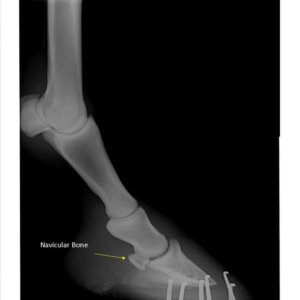
Equine Navicular Disease has many names, including Navicular Syndrome, caudle heel pain as well as podotrochleosis.  The condition is all too common to many horse owners, unfortunately, and can significantly impact performance, general movement and overall quality of life due to pain generally located in the heel region of the front feet.  Navicular Syndrome can be difficult to manage, especially in the advanced stage, but through a combination of approaches, including nutrion and herbs, the outcome for the patient can be improved.

Navicular Disease In the Horse Read More »