

Equine Articles
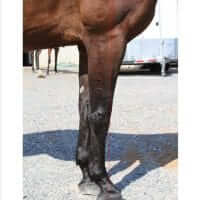
One of the most common problems in the equine athlete and pleasure horse is recurring lameness, which can be equally frustrating for owner, rider and veterinarian. At one moment, the issue may seem resolved, bringing relief, but then it may recur or maybe even a new problem develops. Being a veterinarian, horse owner and involved in the rehabiliation of horses, I understand the frustration but have come to realize that there is much to discover, learn and reveal when it comes to seeing the ‘entire’ horse in these situations. More often than not, the primary problem the horse is presented for is actually not the main issue, but in order to see the true problem, we need to step back and look at several factors. Despite us wanting to fix everything in one fail swoop, often the issue is more complex than we would like it to be.
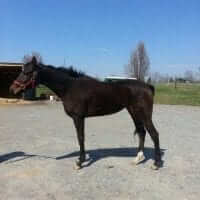
Easy keepers. Most horse owners know what this term means almost instantaneously when they hear it. In general terms, it refers to a horse that has a tendency to carry more weight and gain weight easily, often with just the sight of a green pasture. Almost any horse can be an easy keeper, but there are certain breeds that are more prone including Quarter Horses, Pony breeds, draft breeds and even some warmbloods. Many of these easy keepers progress to metabolic syndrome and even insulin resistance over time, each a stage of continued deterioration at a cellular level. In many situations, these same horses tend to have concurrent lameness issues ranging from joint degeneration to tendon issues and laminitis, but also many also seemed more prone to allergies, respiratory problems and even eye issues. What is the connection and why do many standard therapies fail to provide relief for this particular group of horses?

When we think of inflammation, it is often in the form of pain and swelling. Joint pain, stiffness, a wound or cut, sore back, sore throat or even an ear infection. All of this is true and these conditions are associated with inflammation, but the overall concept goes much deeper, often being unrecognized clinically but all too closely tied with other health conditions. It is an important concept to grasp, even on the most basic level, as with this understanding, we have opportunities to intervene which may give us more opportunities to manage and even prevent certain conditions.
Disease Prevention & Management; The 20,000 Mile View
Everyone is looking for the ultimate cure or answer to whatever condition impacts their health or lifestyle, whether if that is for themselves, their pets or their horses. Is there an answer out there? A solution to what ails you? The answer is more complex than what you would like to hear, not necessarily a ‘yes’ or ‘no’, but more or less in between.

Does your horse have a healthy and strong immune system? How do you know? The most common problems we associate with a poorly functioning immune system are recurrent infections and even allergies, but what about other conditions? Even in the case of infections, we most often attribute a poor immune response to more severe infections that may even result in hospitalization, but are there other clues or more subtle situations that may indicate that we have a problem? The immune system is complex and involved in more bodily processes than one might just realize.
As a veterinarian, I have to confess that after almost 20 years of clinical practice, I failed many of my patients due to lack of knowledge about proper nutrition. Being a student in veterinary school, honestly, there was not much focus on nutrition. In some courses, there was mention of various nutrients, but not much pressure to use the diet as a tool to aid in disease management and recovery. The good news is that after all of those years, I did ‘wake up’ and realize the importance and today, my approaches are much different for myself, our pets and those horses that I have contact with on a daily basis. It wasn’t always this way and I discover more each day, which can be exciting!
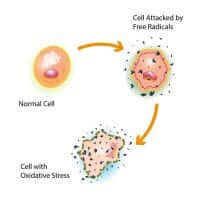
Free radicals are an important entity in chemistry and in health, having been researched for many years with connections to cellular changes that may impact overall health and aging. A free radical is a molecule that has an unpaired electron in the outer shell, which creates instability and a high rate of reactivity with other molecules. Free radicals are produced as a normal part of cellular respiration or energy production, but can also be generated as a consequence of environmental factors, stress, poor diet, food additives, medications and genetics. In general, they can have huge negative impacts on overall health, performance and sustainability, but the good news is that with understanding, we also realize that there are things we can do to minimize the damage inflicted.
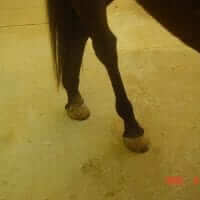
Do you have a horse or know of one impacted by EPM? Equine Protozoal Myeloencephalitis (EPM) is unfortunately a common disease in the horse, impacting hundreds, if not thousands every year. The outcomes for each case can vary dramatically, resulting in a huge expenditure for the owner and an uncertain future for the horse. Give the huge variability in outcomes despite newer treatment options, one is left asking ‘why’ and what more can be done to aid in prevention and therapy to help increase the success rates. Maybe it is time to rethink our approach to these cases in order to maximize the outcome.
Which Cur-OST formula is right for my horse?
Our Cur-OST® formulas target a healthy inflammation response and were created originally to benefit Dr. Schell’s equine patients, helping to improve overall health, joint mobility, performance and reduce aches & pains. There are many joint and health supplements available for horses, but the goal with our formulas is to first provide natural ingredients and herbs that are effective in their actions and second, provide the highest levels based on research to get those results. The choices between the Cur-OST® equine formulas may appear confusing but really, there is a strategy for each formula. The most common question we have is ‘which formula is right for my horse?’. The answer is not straight forward considering that each horse is an individual, but hopefully we can outline the goals and uses for each formula.
Daily aches and pains are one of the biggest problems we deal with as we get older, but they are also very common in our pets and horses, especially if they are athletes. The aches and pains are often associated with joint deterioration on many levels with resulting cartilage degeneration, which creates discomfort. Most people resort to traditional joint therapies, including glucosamine and chondroitin, in addition to various pain medications such as non-steroidal anti-inflammatories to help control pain. Despite these efforts, many are still seeking options to help get to the next level of comfort not only for themselves, but also for their equine companions and pets. Let’s take a look at what is going on and what other options may be available.
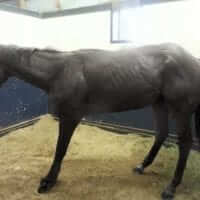
“Tying Up”, myositis, Monday Morning Disease and azoturia all refer to which is more technically known as Equine Rhabdomyolysis Syndrome in horses. It can be a very common problem in some disciplines and breeds. The most common breeds involved in the condition include the Quarter Horse, Thoroughbred, Arabian and the draft horses. In various research papers, tying up has been noted in approximatley 4% of Arabian Endurance horse and up to 10% of racing Throughbreds. Given the increase in the incidence and possible clinical repercussions of the condition on the performance of the horse, there has been much research trying to unravel the mystery as to what exactly causes the problem.
Why so many formulas, Dr. Schell?
I get asked this question a lot, especially when it comes to the horses. In reality, back in 2006, when we were first researching and seeking a solution for our older equine patients with osteoarthritis, I thought I had a fix for every solution. The original formula we utilized was our EQ Plus product and based on the results we were seeing, I believed that the formula would provide relief for every patient. In reality, as time went by, I came to realize that each patient was an individual and despite the efficacy of the EQ Plus, there was a percentage that could be helped further and another percentage that didn’t require that strong of a formula. This is when we had to dig deep and begin to explore other options as I knew there had to be a solution.
Respiratory Disease in the Horse
Anyone that has owned a horse has probably experienced respiratory disease in some shape or fashion. Much the same as humans, horses are prone to developing upper respiratory infections due to viral and bacterial invasion, but the two most common and troubling conditions affecting horses in today’s industry is chronic obstructive pulmonary disease (reactive airway disease) and exercise induced pulmonary hemorrhage (EIPH). Being a veterinarian working on horses, I have certainly encountered my fair share of COPD patients as well as EIPH athletes and feel a times that these conditions are becoming more prevalent.

As a veterinarian, I routinely vaccinate patients on a daily basis as a perceived part of preventative health. Vaccines have certainly saved many lives and prevented many infectious diseases from spreading, but one has to question their timeliness as well as possible negative impact on health as well.
Colic in the Horse
Colic. . . one of the most dreaded conditions by the average horse owner. It equates to pain for your companion, potentially long nights of monitoring and even costly veterinary care in the worst scenarios. The good news is that in the majority of colic cases, the problem often resolves on its own over a short period of time with some TLC and dietary changes. There are many different types of colic, which essentially means abdominal pain, but that belly pain can be coming from anywhere.
Equine Lameness and Connection with GI Health
As horse owners, we are likely to be familar with lameness associated with tendon or ligament problems, but did you know that there may be a connection with digestion? In many cases, we have tried everything to get that tendon or ligament to heal, but all efforts are futile it seems, with the problem likely recurring. Now, I certainly don’t have all of the answers for every problem, but over the past years, I have made some observations and a connection with GI health.
Behavioral Problems In The Horse
An uncontrolled horse comes in many different sizes and degrees of severity. No matter the level of the problem, a horse with behaviorial issues not only creates potential problems with competition and training, but they can also be very dangerous to be around due to unpredicatability. There are many different causes to behavioral problems, some we can manage and others create more of a challenge. One of the first things we need to do is get a better feel for the problem at hand.
Managing Gastric Ulcers
Are you or your horse an antacid junkie? Stomach or gastric ulcers are a common condition impacting horses, people and even pets sometimes. We see commercials regarding antacids and ‘acid blockers’ all of the time and horse owners are exposed to these medication way too often, being an unfortunate part of many horse’s daily routines. For some people, it is no different and many of the commercials seen make it seem like it is the ‘in’ thing to do to take or give these medications. If it is as prevalent in today’s horse world and for people as we are made to believe, then we have a problem. If we have a problem, then we need to understand the problem in order to remedy it or at least improve it.
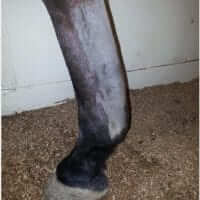
Tendon Injury management can be challenging, often with a tremendous investment of time and money. After 20 years of veterinary practice, utilizing traditional methods of management, I am a firm believer in providing for the tissue that is injured and thus, creating the ideal environment for cellular repair and recovery. The results tend to be more reliable, quicker and the patient seems to do better in the long term. I feel it is critical to control the inflammatory response and provide proper nutrients, which then opens the door for healing. Here is one case, amongst many, that demonstrates a fairly simple approach with dramatic results in a short period of time.
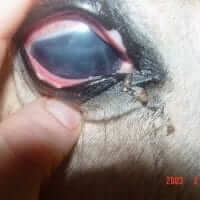
Equine recurrent uveitis (ERU) is unfortunately a common condition in horses, impacting up to 7% of farms with at least one horse affected. ERU is considered one of the most common causes of blindness in the horse and seems to impact many breeds, but with certain predilections to the Appaloosa and Paint breeds. The condition is very complex with much to be learned and understood in terms of pathophysiology, but treatment options can offer some help in managment and preservation of vision.
Soundness; A Broad Concept
Soundness. It is a word that all horse owners are familiar with, but really, what does it mean? By definition, soundness infers free from defect, injury, disease and in good condition, healthy and robust. Is it a reality? Is it really possible? I think that in order to understand this concept further, we have to look at the horse, like ourselves, from multiple different perspectives.
When you hear the word “inflammation”, the most common image is one of redness, swelling and pain. Maybe a sprained ankle, tendon or even a blister. While this is true for one form when view externally, it doesn’t always hold true. Pain is a common association with inflammation, but doesn’t always have to be present for the inflammatory process to impact health on many levels. Sometimes, it is like a smoldering fire, out of normal view, contributing to many health conditions in people, pets and horses.
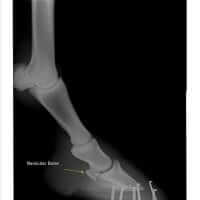
Equine Navicular Disease has many names, including Navicular Syndrome, caudle heel pain as well as podotrochleosis. The condition is all too common to many horse owners, unfortunately, and can significantly impact performance, general movement and overall quality of life due to pain generally located in the heel region of the front feet. Navicular Syndrome can be difficult to manage, especially in the advanced stage, but through a combination of approaches, including nutrion and herbs, the outcome for the patient can be improved.
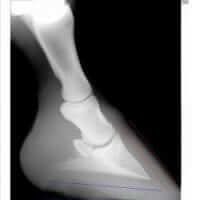
Laminitis is unfortunately a common condition affecting horses of any discipline or breed; whether if they are a Grand Prix Jumper or a backyard family companion. This condition can be devastating in terms of overall health and is considered to be one of the main causes of euthanasia second to colic by many standards. Laminitis is closely connected with a variety of clinical diseases, but the bottom line is there is uncontrolled inflammation on various levels, contributing to bone rotation and poor laminar health. If we address these problems properly, then outcome can be improved dramatically in many cases.
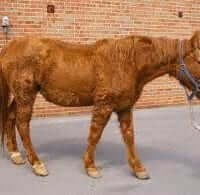
Cushing’s disease in the horse is becoming a more popular diagnosis, creating confusion with many horse owners. Cushing’s disease or Pituitary Pars Intermedia Dysfunction (PPID) is most commonly diagnosed in the aged horse, but is increasingly become more common in perceived younger horses with concurrent usage of medications to control the condition. The impact of Cushing’s disease in the equine community is large, with more cases being diagnosed as the lifespan of the horse increases, and can create many management frustrations for the horse owner. The syndrome is very complex, leaving many unanswered questions but many roads for possible exploration to enhance quality of life for these patients.
Sport Horse Lameness: Raising More Questions than Answers
Lameness and medical concerns in the sport horse have increased dramatically and likely are attributed to the increased use and performance level of these animals. To keep up with medical demands, we have seen an increase in our diagnostic capabilities and technologies as veterinarians. The concern that I have, as a clinician, is that the drive for these ever increasing technologies to aid in our diagnosis is rising, but it is not being counter driven by new therapies to manage the problems discovered. We raise our capabilities, hopefully to detect problems earlier, but yet our intervention techniques have not changed, giving the same results in the end for the patient. I think at times, we are missing the obvious when it comes to assisting these patients.
Stress. It impacts us all, no matter if we are a human, pet or a horse, leading to anxiety, behavioral problems and many negative health implications. It affects us all on different levels and considering the health effects, the best option would be to just eliminate stress, but that is not always possible. The impact to our health is obvious and well known, but often we neglect to realize the same impact on our pets and equine companions. Those effects are real, but the question comes as to what is the best way to manage them? Let’s take a look at one promising option.
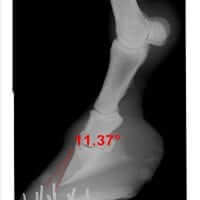
Laminitis in horses has been proposed to be one of the most common causes of euthanasia in horses next to colic. The condition comes about due to a variety of factors with some horses being more predisposed than others and the condition has varying levels of presentation in terms of severity. Ultimately, we have to ask ourselves why the condition occurs, what is going on at a cellular level and what can we do better to manage the problem and improve the outcome for the patient? In my many years of managing laminitis, I have found that the outcomes are best when we address the needs of the patient through nutritional type of resources, which I believe aid in better long term management and often improved overall health. Here is my approach when it comes to laminitis in horses for optimal outcomes.